

Where to Stay in Prague: Best Neighborhoods Explained by a Local
Choosing where to stay in Prague can shape your entire trip. This local-written neighborhood guide explains which areas fit your travel style — and which to avoid.
Where to Stay in Prague: A Neighborhood-by-Neighborhood Accommodation Guide
Prague looks compact on the map, but when it comes to choosing where to stay, it can be surprisingly tricky. Most first-time visitors instinctively think, “I should stay right in the center.” That makes sense — but living in Prague teaches you something important very quickly:
A good place to stay isn’t just about proximity. It’s about how the city feels at the end of the day.
In Prague, staying in the wrong neighborhood can leave you exhausted even if the sights are beautiful. Staying in the right one, on the other hand, makes the city feel effortless — as if it’s unfolding naturally around you.
This guide isn’t written from hotel listings or tourist brochures. It’s written from daily life. Instead of ranking neighborhoods as “best” or “worst,” we’ll look at who each area actually works for — and who it doesn’t. The goal isn’t to tell you where to stay, but to help you recognize where you belong.
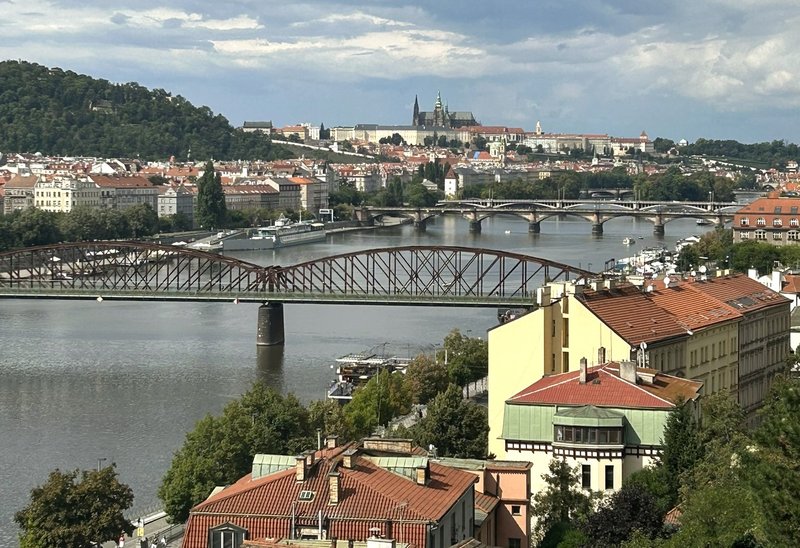
The one thing most people miss when choosing where to stay in Prague
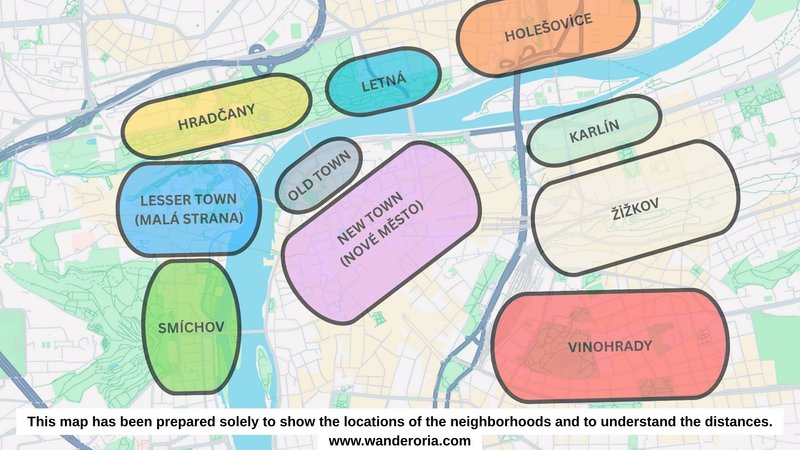
Prague is not a single-center city. On the map, everything seems walkable and close together, but in reality, similar distances can feel completely different depending on the neighborhood.
There are a few reasons for this.
First, tourist density. Some areas look charming and lively during the day, but remain crowded and overwhelming well into the evening. Especially around Old Town, you may finish a long day of sightseeing only to push through the same crowds on your way “home.” For a short stay this might be tolerable — after a few days, it becomes draining.
Second, Prague’s walking–transport balance. The public transport system is excellent, but Prague is a city best experienced on foot. If the neighborhood you stay in doesn’t invite you to walk — to wander without a plan — even a great hotel won’t give you a great experience.
Third, evenings matter more than people expect. In Prague, neighborhoods reveal their true character after sunset. Some areas lose their charm once the day crowds fade. Others come alive. Most travelers don’t factor this into their accommodation choice — and that’s where disappointment often starts.
So as we go through each neighborhood, keep these questions in mind:
- Will I enjoy stepping outside in the morning?
- Will this area feel comfortable when I come back tired at night?
- Will staying here make exploring Prague easier — or heavier?
Let’s start with the place most people choose first.
Old Town (Staré Město): Inside the postcard — but short on air
Old Town is Prague’s showcase. The Astronomical Clock, narrow cobblestone streets, Gothic facades — it’s exactly what many people imagine when they think of the city. Staying here means opening your door and stepping straight into the “Prague photos.”
And yes, it’s impressive.
But after spending real time here, one thing becomes clear: Old Town is always on stage. The curtain never fully comes down.
Who it works for
- First-time visitors who want everything immediately around them
- Short stays (one or two nights)
- Travelers who value convenience above atmosphere
Who may struggle here
- Anyone sensitive to crowds
- Travelers looking for quiet evenings
- Those wanting local cafés and everyday life
Pros
- Maximum proximity to major sights
- Excellent metro and tram connections
- Extremely convenient for limited itineraries
Cons
- Constant crowds
- Tourist activity doesn’t really stop at night
- Many restaurants and cafés are designed for visitors, not locals
Evening and night atmosphere
Old Town is beautiful at night — but not calm. The streets don’t empty; they simply change rhythm. If your ideal evening involves unwinding rather than navigating people, this can become tiring.
Transport and walking reality
Everything is close, but paradoxically, walking becomes less enjoyable. Instead of wandering, you’re often managing crowds.
A local perspective
Old Town is great for falling in love with Prague at first sight. But for most people, it works better as a place to visit, not necessarily as a base to return to every night.
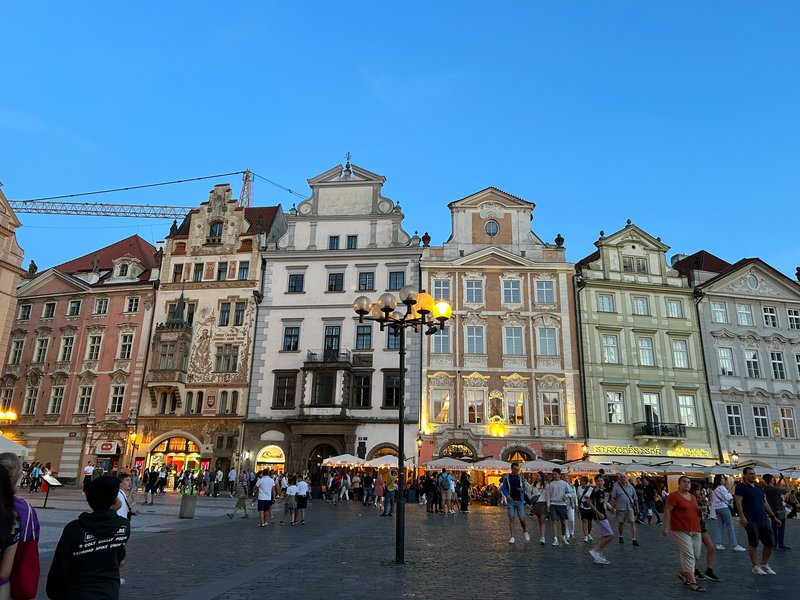
New Town (Nové Město): Central, but easier to breathe
Despite its name, New Town isn’t particularly “new.” What it is, however, is balanced. It sits right next to Old Town, yet avoids much of its pressure. From a local perspective, this is one of the safest choices for first-time visitors who want convenience without constant intensity.
If someone tells me, “I want to stay central, but I don’t want to feel trapped in crowds,” New Town is usually where the conversation ends.
Who it works for
- First-time visitors who want central access without chaos
- Travelers who enjoy long walks
- People who like tourist sights by day and a more local rhythm at night
Who it may not suit
- Those wanting immediate medieval scenery outside their door
- Travelers looking for a very compact, intimate area
Pros
- Walking distance to Old Town
- Wider range of restaurants and cafés
- Evenings feel calmer and more livable
Cons
- Less “storybook” atmosphere than Old Town
- Size matters: some streets feel very different from others
Evening and night atmosphere
New Town settles into itself in the evening. Offices close, locals take over cafés, and the pace slows without becoming dull. Tourist presence doesn’t disappear, but it blends into everyday life instead of dominating it.
Transport and walking reality
This is one of Prague’s best-connected areas. Multiple metro lines intersect here, tram access is excellent, and long walks toward the river or Old Town feel natural rather than forced.
A local perspective
If you want to stay central and still enjoy coming “home” at night, New Town is often the least risky choice. It rarely disappoints.
Malá Strana: Romantic, quiet — and not as easy as it looks
Malá Strana is one of Prague’s most beautiful districts. Sitting just beyond Charles Bridge, it’s full of palaces, narrow streets, and postcard views. During the day, it feels almost unreal.
Staying here, however, is a different experience than visiting.
Who it works for
- Couples looking for romance
- Travelers who value calm over convenience
- Early risers who enjoy quiet mornings
Who may struggle here
- Anyone who dislikes hills
- Travelers who enjoy nightlife
- Those who want many dining options close by
Pros
- Exceptionally peaceful atmosphere
- Dramatic drop in crowds in the evening
- Stunning streets for evening walks
Cons
- Hilly terrain
- Limited evening options
- Strong dependence on bridges to reach other areas
Evening and night atmosphere
Once the day visitors leave, Malá Strana becomes very quiet. For some, this feels magical. For others, it can feel isolated — especially if you enjoy spontaneous dinners or nightlife.
Transport and walking reality
Trams run through the area, but crossing to Old Town usually involves walking over bridges. These walks are beautiful — at first. Repeating them several times a day can change how you feel about them.
A local perspective
Malá Strana is wonderful to experience, but not universally comfortable to stay in. It slows you down — which can be either exactly what you want, or quietly frustrating.
Vinohrady: For those who want to feel what living in Prague is like
Vinohrady is one of those neighborhoods that rarely tops tourist lists, yet consistently wins over people who spend real time in the city. It’s not flashy, not performative — and that’s exactly its strength.
Spending time here reveals something important: Prague doesn’t need to impress you to be enjoyable. It just needs space to breathe.
Wide streets, leafy parks, corner cafés — Vinohrady offers a sense of everyday life that many visitors don’t realize they’re missing until they experience it.
Who it works for
- Travelers who enjoy slow exploration
- Those curious about local café and park culture
- Visitors who want calm evenings without isolation
Who it may not suit
- Travelers who want immediate access to major landmarks
- Those looking for a constant tourist atmosphere
Pros
- Strong local character
- Excellent cafés and restaurants
- Minimal tourist congestion
Cons
- Can feel “too quiet” for short, fast-paced trips
- Walking to Old Town may take longer depending on location
Evening and night atmosphere
Vinohrady feels lived-in. Parks fill up, cafés stay busy, and neighborhood bars become social spaces rather than attractions. It’s active without being loud.
Transport and walking reality
Metro and tram access is excellent, with travel times to the center usually under 15 minutes. Within the neighborhood, walking is part of the pleasure.
A local perspective
If you wanted to understand Prague beyond sightseeing — how it feels to actually live here — Vinohrady would show you that side of the city effortlessly.
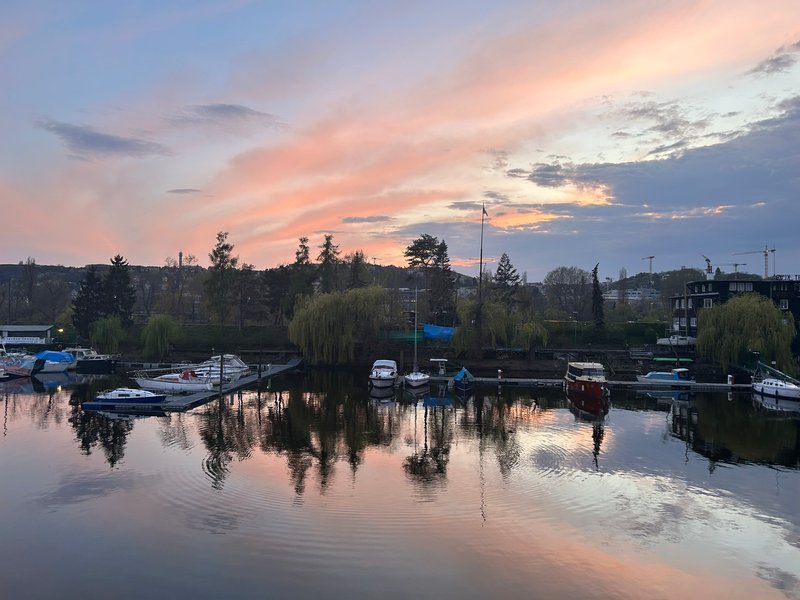
Žižkov: Affordable, raw — and not for everyone
Žižkov is one of Prague’s most polarizing districts. People either defend it passionately or avoid it entirely. The reason is simple: Žižkov doesn’t soften itself for visitors.
It’s unpolished, unapologetic, and very real.
Who it works for
- Budget-conscious travelers
- Visitors looking for an alternative, non-touristic experience
- Those comfortable navigating unfamiliar urban environments
Who may struggle here
- Travelers prioritizing calm and visual charm
- First-time visitors who prefer predictability
Pros
- Generally lower accommodation prices
- Strong local pub culture
- Little tourist pressure
Cons
- Visual roughness in some areas
- Nighttime atmosphere can feel intense
Evening and night atmosphere
Žižkov is lively after dark, but not curated. Bars fill up, streets stay active, and the energy can feel exciting or overwhelming depending on your tolerance.
Transport and walking reality
Tram connections are strong, but hills are common. Walking can be enjoyable — or demanding — depending on your route.
A local perspective
Žižkov can be a great base if you know what you’re choosing. If you don’t, it can feel harsher than expected.
Holešovice: Spacious, modern, and quietly evolving
Holešovice is one of Prague’s most visibly changing areas. Once industrial, it’s now defined by wide streets, converted spaces, and a sense of openness that’s rare closer to the center.
It doesn’t feel historic — but it feels comfortable.
Who it works for
- Travelers who prefer modern surroundings
- Those seeking space and calm
- Visitors interested in cultural venues
Who it may not suit
- History-focused travelers
- People who want everything within walking distance
Pros
- Less crowding, more room
- New cafés and cultural spaces
- Good value for modern accommodation
Cons
- Limited historical atmosphere
- Some areas feel very quiet at night
Evening and night atmosphere
Holešovice winds down early. Streets become calm, cafés close sooner, and the neighborhood feels residential rather than social.
Transport and walking reality
Trams and metro lines connect the area efficiently to the center. Walking distances are longer, but routes are flat and easy.
A local perspective
If you want to stay in Prague without constantly feeling like you’re in a tourist zone, Holešovice offers a surprisingly relaxed base.
So where should you stay? A quick decision guide
- First-time visitors with limited time: New Town
- Postcard seekers: Old Town (short stays only)
- Romantic, quiet travel: Malá Strana
- Those who want to feel local life: Vinohrady
- Budget and alternative travelers: Žižkov
- Modern and spacious comfort: Holešovice
A final note: In Prague, where you stay is half the experience
In Prague, accommodation isn’t just about sleep. It shapes how your days begin, how your evenings end, and how the city relates to you.
Choose the right neighborhood, and Prague feels generous. Choose the wrong one, and even a beautiful city can feel heavy.
If you want to continue planning:
- Public Transport in Prague: Metro, Trams, and Walking Logic
- Prague Walking Routes for First-Time Visitors
- Prague at a Glance: A First-Timer’s Overview


