

Best Photo Spots in Prague | Capture the City on Foot
Discover the best photography spots in Prague. Phone-friendly locations, light tips, and viewpoints to capture the city beyond postcards.
The Most Beautiful Photo Spots in Prague: Frames That Truly Capture the City
Why Is Prague So Powerful for Photography?
Prague often feels like an “easy” city to photograph. Historic buildings, bridges, towers — wherever you turn, there’s a ready-made frame. But what truly makes Prague strong isn’t individual landmarks. It’s the layered structure of the city itself.
Hills rising behind old neighborhoods, the river cutting through daily life, narrow streets opening unexpectedly, the sound of trams, and constantly changing light. In Prague, good photos are rarely the result of strict planning. They usually appear while you’re walking, turning a corner, stopping at the top of a slope, or waiting for a tram.
This article isn’t about ticking off famous viewpoints.
It’s about answering a different question:
Where should you pause, and what should you wait for, when photographing Prague?
And most importantly — this guide is written for people who shoot with their phones, not professional cameras. You don’t need complex gear here. You need awareness.
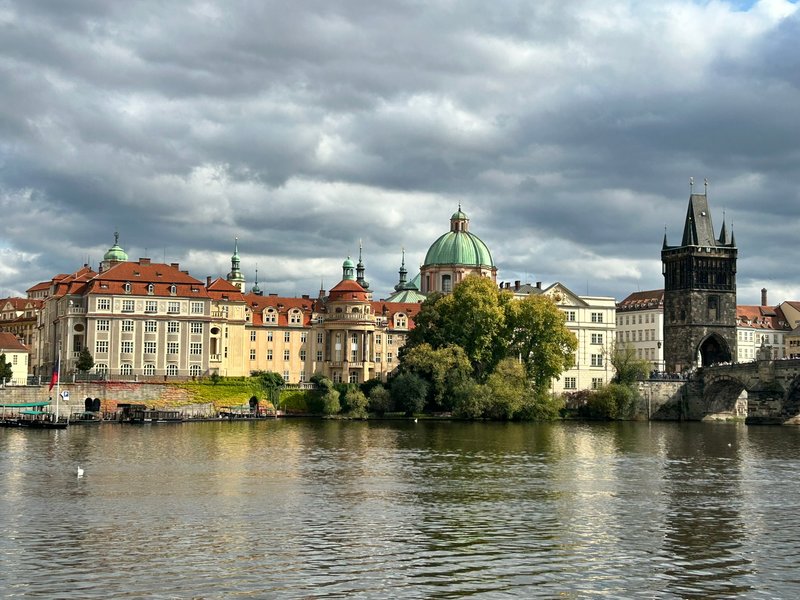
The Basic Logic of Photographing Prague
Before talking about specific locations, it helps to understand how Prague works visually. These simple principles apply almost everywhere in the city.
- Light rewards patience
Prague’s light is rarely harsh. Early mornings and the hours before sunset bring soft, forgiving tones that flatter both architecture and streets. The same place can feel completely different depending on the time of day, so rushing usually works against you.
- Crowds aren’t always the enemy
Yes, Prague is busy. But instead of trying to eliminate people from every frame, it’s often better to use movement intentionally. Trams, pedestrians, tourists crossing a square — they can add scale and depth when framed carefully.
- Slopes are visual gold
Prague isn’t flat. And that’s a gift. The moments when you stop to catch your breath at the top of a hill are often the moments when the city opens up visually. Slopes, stairs, and elevated streets naturally create strong compositions.
- A phone is more than enough
Every location mentioned in this guide can be photographed comfortably with a smartphone. The difference comes from where you stand, what you wait for, and how you look — not from the lens.
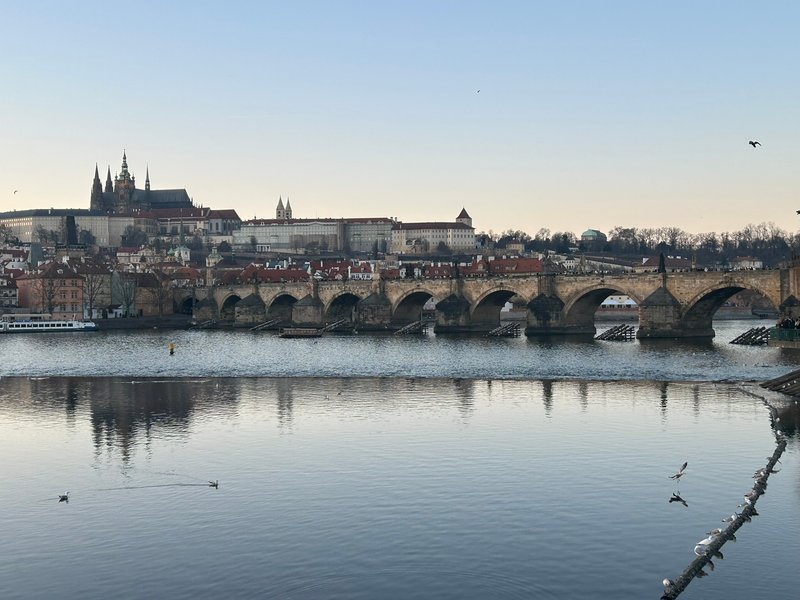
Classic but Essential Photo Spots
Some places are photographed endlessly, and for good reason. Avoiding them entirely would be a mistake. The key is how and when you photograph them.
Charles Bridge
Charles Bridge is Prague’s most photographed landmark — and often its most crowded. During the day, it can feel overwhelming. But early in the morning, the bridge reveals a completely different character.
Before 7 a.m., the bridge is quiet. Stone textures, statues, and sometimes light mist create a timeless atmosphere. When shooting with a phone, stepping closer to the edges and including statues in the frame adds depth and context, rather than standing directly in the center.
Old Town Square
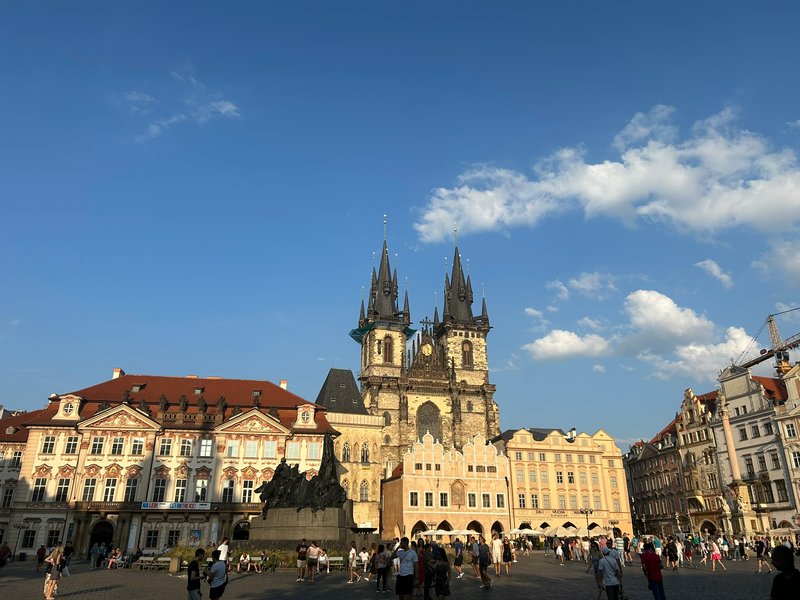
Old Town Square is often treated as a quick stop, but it rewards patience. Everyone photographs the Astronomical Clock, yet the square becomes more interesting when you shift your position — shooting from corners, behind café tables, or toward the narrow streets leading away from it.
Close to sunset, the façades warm up beautifully. Even with crowds present, the openness of the square allows the frame to breathe.
Prague Castle Area
Prague Castle isn’t just about panoramic views. Its courtyards, gates, and stone details offer excellent opportunities for quieter, more intimate photos.
Early mornings are ideal here. Before tour groups arrive, the space feels calmer, and even simple compositions taken with a phone look clean and deliberate.
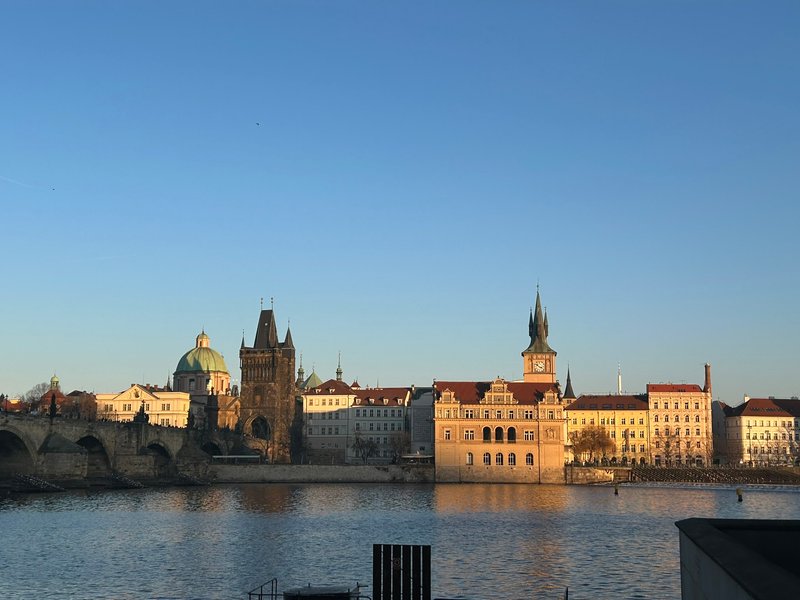
Photo Spots That Capture the Spirit of Prague
Some of the strongest photos in Prague don’t come from famous viewpoints. They appear when you stop trying to “get the shot” and start moving through the city without urgency. Prague reveals itself slowly, especially away from its main attractions.
The Streets of Malá Strana
Malá Strana is usually represented by postcard views of the castle above it. But its real photographic strength lies in its side streets. Narrow pavements, pastel façades, unexpected slopes — these streets feel lived-in rather than staged.
Early mornings are ideal here. The light is soft, the streets are quiet, and even a simple phone shot can feel intentional. Using a wide-angle lens works well in these narrow spaces, especially when you let buildings rise naturally into the frame.
Nerudova Street and Its Slopes
Nerudova is one of those streets where perspective does the work for you. Looking uphill, rooftops stack into each other; looking downhill, the city slowly opens.
You don’t need to wait for the street to empty. A few people walking through the frame actually help — they add scale and reinforce the feeling of movement. Prague’s rhythm is slow but constant, and this street captures it well.
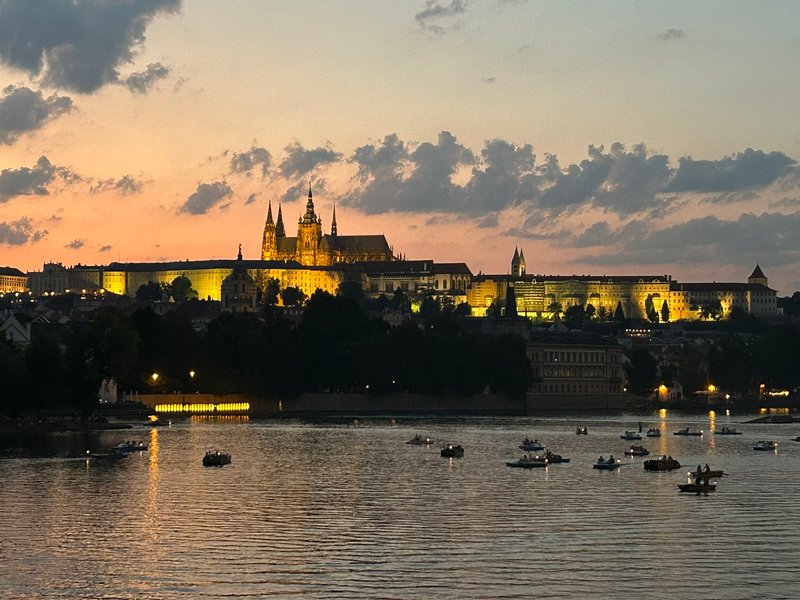
Seeing Prague from Above: Viewpoints and Perspective
One of Prague’s quiet advantages is how easily you can step back and see the city as a whole. And you don’t need paid viewpoints to do that.
Letná Park
Letná Park offers one of the most balanced views of the city. The river, bridges, and neighborhoods come together naturally, without feeling forced.
Sunset works especially well here, when the light softens and reflections start to appear on the water. Instead of focusing only on the skyline, include people sitting on benches or walking past — they ground the scene and make it feel human.
Petřín Hill
Petřín Hill is quieter and slightly more introspective. From here, Prague looks compact and layered rather than expansive. This is a good place for depth-based compositions: trees in the foreground, rooftops behind them, sky fading gently above.
Late afternoon light creates long shadows and subtle contrast, perfect for simple, calm frames.
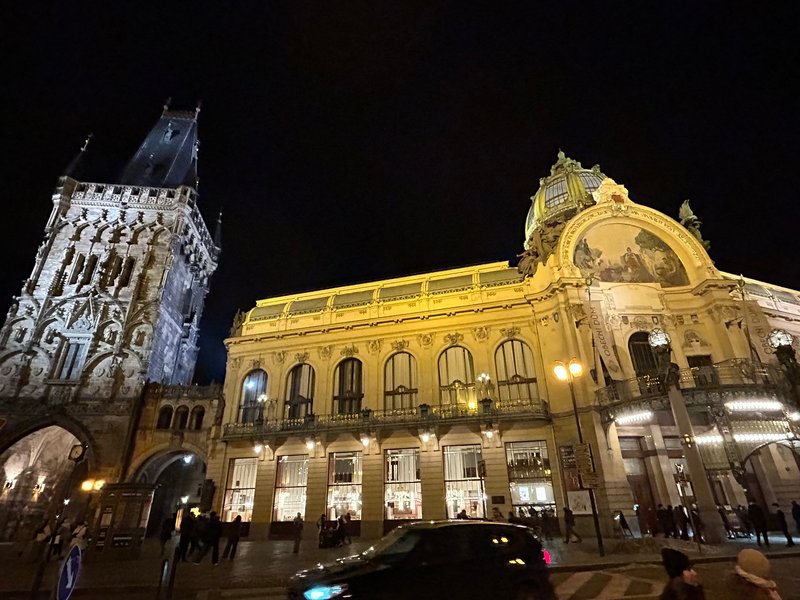
Movement Matters: Trams, Streets, and Everyday Life
Prague isn’t a static city. Photographing it as if it were often feels incomplete. Movement — especially trams — is part of its visual identity.
Trams as a Visual Anchor
Prague Tram are more than transportation. They’re one of the city’s strongest visual signatures. A red-and-white tram cutting through historic architecture instantly places the photo in Prague.
This is where patience matters. You usually know a tram is coming — find your spot, frame the scene, and wait. Vertical framing often works better here, especially when buildings rise on both sides of the street.
Everyday Scenes
Some of the most honest Prague photos involve ordinary moments: locals carrying groceries, someone walking their dog, a quiet cigarette break outside a café. These aren’t dramatic scenes, but they define the city.
To capture them, leave the main squares and walk toward residential areas. Don’t aim for perfection — aim for presence. Slight imperfections often make the photo feel more real.
Photographing Prague by Time of Day
Timing changes everything in this city.
- Early morning: Calm streets, soft light, minimal distractions.
- Midday: Crowds increase — switch to narrow streets and details.
- Sunset: Viewpoints come alive with color and depth.
- Evening: Streetlights, reflections, and a slower, cinematic mood.
Each phase offers something different, and Prague handles all of them gracefully.
Practical Phone Photography Tips for Prague
Every location mentioned in this guide can be photographed comfortably with a smartphone. What matters isn’t equipment, but how you use space, timing, and patience. Still, Prague has a few phone-specific tricks worth knowing.
When Wide Angle (0.5x) Works Best
Prague is compact. Narrow streets, courtyards, and slopes often don’t give you room to step back. This is where your phone’s wide lens becomes useful — especially in:
- Malá Strana side streets
- Steep uphill roads
- Tram corridors framed by buildings
That said, wide angle isn’t universal. At viewpoints, it can make the city feel distant and flat. In those cases, switching back to the standard lens usually produces a stronger, more grounded image.
Vertical or Horizontal?
- For Instagram: Vertical framing works exceptionally well in Prague. Tall façades, towers, and narrow streets naturally support it.
- For blogs or archives: Horizontal framing feels more balanced at viewpoints and along the river.
When in doubt, take both. Prague rewards small variations.
Photo or Reel?
You don’t need to turn every moment into a video. But some scenes lose their impact without motion:
- A tram entering the frame
- People flowing through a square
- Walking downhill with the city opening ahead
Short, unplanned clips often end up more valuable than carefully staged reels.
Do You Need a Tripod?
Usually, no. But after sunset or in low light, stabilizing your phone helps. Railings, walls, benches — Prague offers plenty of natural supports if you slow down and look around.
Evening Photography: When Prague Changes Character
Evenings in Prague are often overlooked, yet they’re one of the city’s strongest photographic moments. As daylight fades, the city becomes quieter, warmer, and more textured.
Old Town After Dark
Old Town shifts noticeably once the sun sets. Streetlights, shop windows, and reflections on stone pavement create depth that doesn’t exist during the day.
Crowds remain, but they feel less intrusive — more like part of the scene than an obstacle.
Along the Vltava River
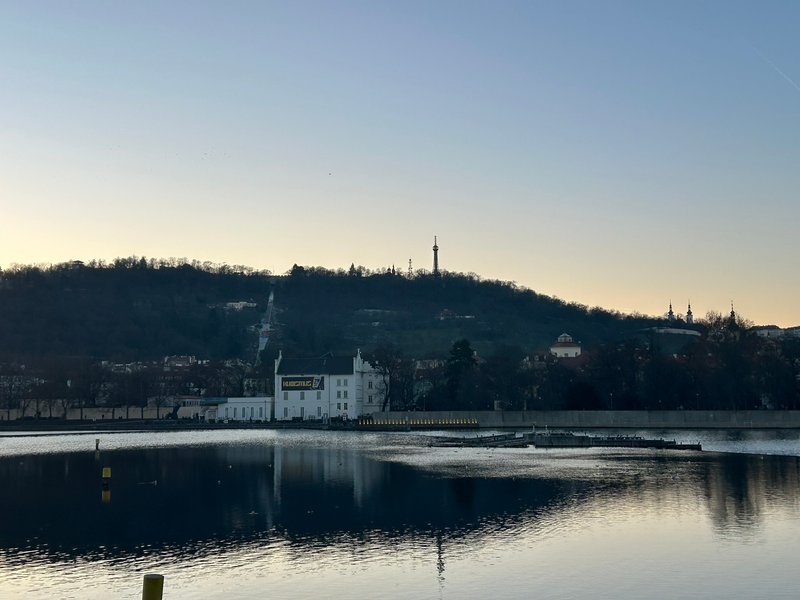
Vltava River offers understated but powerful frames at night. Bridge lights reflecting on water, silhouettes leaning against railings, small ripples breaking the surface — these details work better than wide skyline shots.
Here, simplicity wins. One light source, one reflection, one human presence is often enough.
Photography in Prague Is About Knowing When to Stop
The best photos in Prague usually appear when:
- You decide to pause
- Your planned route breaks down
- You’re no longer rushing somewhere
Prague naturally slows you. It invites you to stop at corners, lean on railings, and look back the way you came. Photography fits into that rhythm rather than interrupting it.
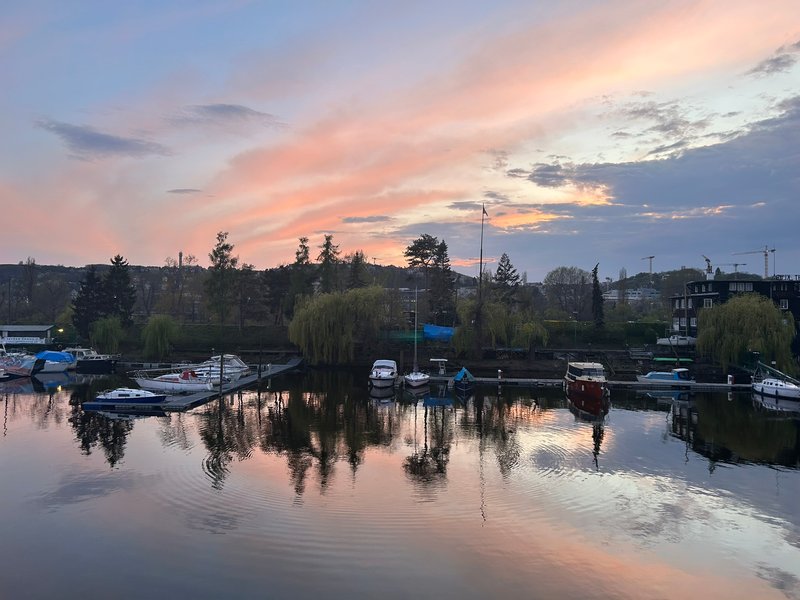
The Best Frames in Prague Aren’t Planned — They Happen While Walking
None of the places mentioned here exist solely to be photographed. They’re part of the city’s daily flow. That’s what makes them powerful.
Photographing Prague isn’t about:
- Completing a checklist
- Chasing famous angles
- Forcing compositions
It’s about noticing when the city quietly offers you something.
If you approach Prague on foot — slowly, without pressure — photography becomes a natural extension of walking. The phone stays in your pocket until the moment feels right.
And in Prague, that moment arrives more often than you expect.


