

Nara History: The First Capital of Japan Explained
Discover why Nara became Japan’s first capital in 710 and how Buddhism shaped early state power through Tōdai-ji and the Great Buddha.
Nara History: The First Capital of Japan Explained
What Does It Mean to Be a Capital?
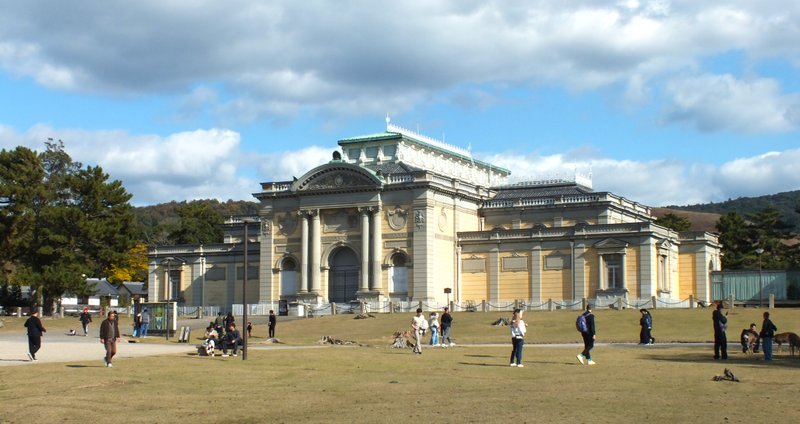
Most travelers associate Nara with its deer. Yet long before it became known for its park, Nara was one of Japan’s first permanent capitals. When it was established as the capital in 710, this was not merely an administrative decision. It marked the deliberate construction of a political and ideological center.
To be a capital is to function as the intellectual core of a country. It is where laws are shaped, symbols are produced, and authority is staged. Nara embodied exactly that role.
Understanding this context changes the way you walk through the city. Even while crossing what looks like a pleasant park, you are standing in what was once the heart of imperial governance. The landscape stops being decorative and starts becoming structural.
Buddhism as State Ideology
During the Nara period, Buddhism was not simply a religion practiced by individuals. It was actively supported by the state and strategically integrated into governance. Influenced by continental models, particularly from China, Buddhist institutions were embedded within the political framework.
This raises an important question:
Why would a state adopt and promote a religion so deliberately?
The answer is cohesion.
In a landscape shaped by regional clans and competing local powers, a unifying ideological framework was necessary. Buddhism offered that framework. It provided moral legitimacy, cosmological order, and symbolic authority. Nara became the stage where this integration of belief and governance took architectural form.
Tōdai-ji as an Architectural Statement
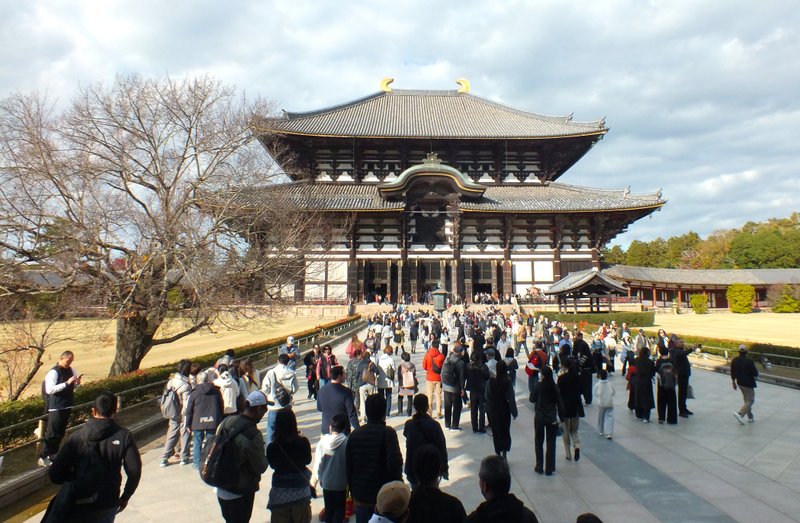
Within this context, Tōdai-ji cannot be understood as merely a temple. Its monumental scale was intentional. The Great Buddha housed within it was not simply a devotional figure, but a political symbol.
Constructing a structure of that magnitude in the 8th century required extraordinary coordination of resources, labor, and technical knowledge. This was architecture as declaration: an assertion of centralized capacity and stability.
Much like medieval European cathedrals embodied both spiritual devotion and political hierarchy, the monumental Buddhist complexes of Nara functioned as visible manifestations of authority. Belief and power were not separated; they were constructed together.
Viewing Nara through this lens reveals something essential. The city is not only a destination for visitors. It is an early experiment in state formation, where architecture, ideology, and public space were consciously aligned.
The Great Buddha: More Than Devotion
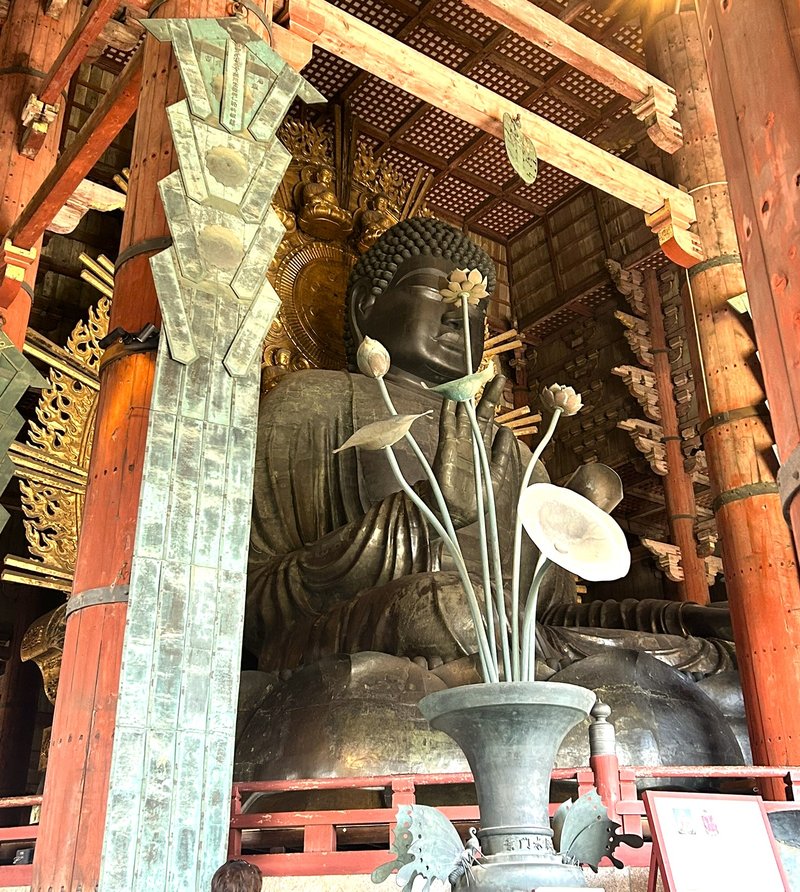
At the center of this architectural and ideological project stands the Great Buddha of Nara. To describe it merely as an impressive statue would be insufficient. It is a political artifact as much as a religious one.
Completed in the 8th century, the statue required immense quantities of bronze, coordinated labor, and state-level resource management. This was not a private act of faith; it was a nationally organized undertaking. The scale alone communicates intention.
When you stand before the Great Buddha, you feel physically diminished. That effect is not accidental. Monumentality reshapes perception. The human body becomes small in relation to the structure, and that physical relationship translates into symbolic meaning. The individual is placed within a larger cosmic and political order.
In this sense, the Great Buddha functioned as both spiritual reassurance and ideological reinforcement. It projected stability, protection, and centralized authority at a time when political unity required visible anchors.
Monumentality and Psychological Scale
Architecture has always been a psychological tool. Scale influences emotion. Height commands attention. Volume creates awe.
Tōdai-ji’s Great Hall, one of the largest wooden structures in the world, amplifies this effect. The building does not overwhelm through ornamentation but through proportion. Thick wooden pillars rise with deliberate rhythm. The roof expands horizontally before lifting upward. The space feels controlled and intentional.
Unlike stone cathedrals in Europe, which often convey vertical transcendence, the wooden structure of Tōdai-ji carries a different message. It feels grounded. Powerful, yet not aggressive. The material choice — wood — creates warmth even at monumental scale. Authority is expressed, but not through intimidation. Instead, it emerges through stability and permanence.
This balance between power and natural materiality reflects a broader cultural logic. Centralization did not erase local identity; rather, it absorbed and structured it.
Ritual Within Structure
Even smaller details inside the Great Hall reflect this layered meaning. Visitors line up to pass through a wooden pillar opening said to bring good health. The ritual is playful on the surface, yet it unfolds within a highly ordered environment.
People wait patiently. They take turns. They respect space. The ritual becomes part of a collective choreography. Tourism and tradition intersect without collapsing into spectacle.
This raises a deeper reflection: are these patterns of public behavior simply modern social habits, or do they echo historical systems of organization that have been internalized over centuries?
Standing inside Tōdai-ji, it becomes difficult to separate architecture from social behavior. The space seems to cultivate discipline. Or perhaps it reveals it.
The Great Buddha and its hall do not merely represent the past. They mirror enduring structures of authority, coordination, and collective identity.

The Shinto Layer and the Meaning of the Deer
Reading Nara only through its Buddhist monuments would leave the story incomplete. The city also carries a strong Shinto dimension, most visibly expressed through its deer.
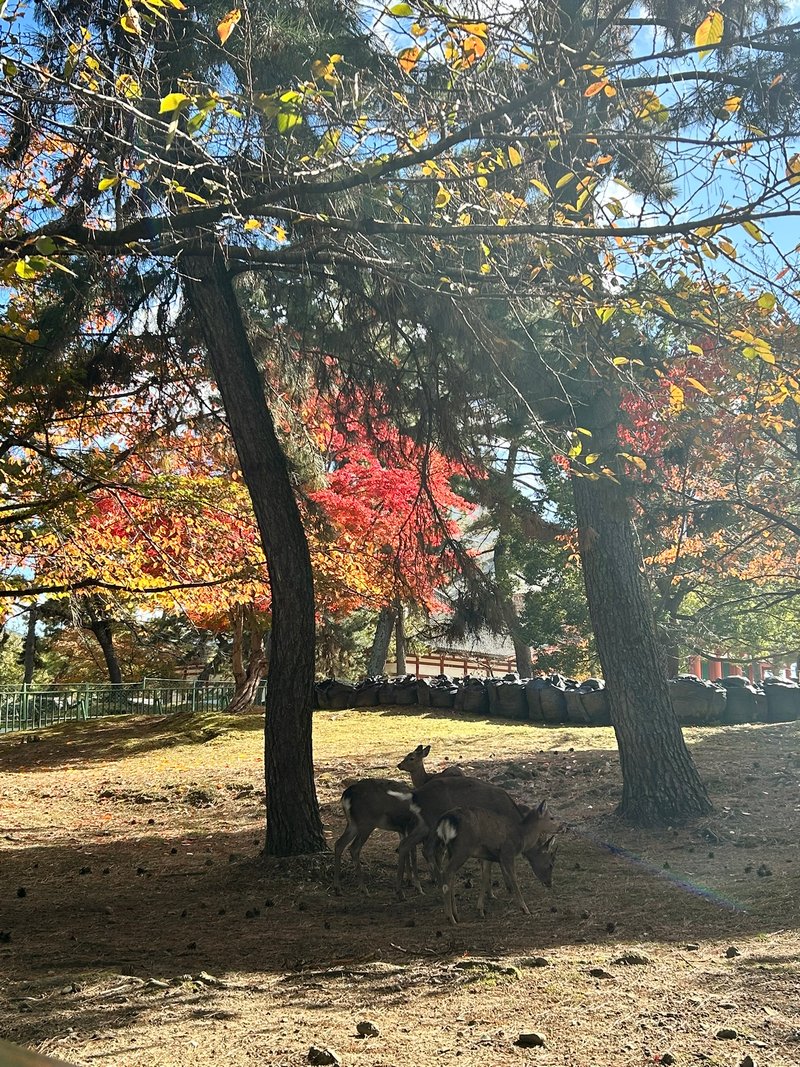
According to tradition, a deity once arrived in Nara riding a white deer. From that point on, deer were regarded as sacred messengers. Their protected status in the city today is not a modern invention for tourism; it is rooted in centuries-old belief.
What makes Nara particularly fascinating is that this sacred status has not been reduced to folklore. The deer still move freely through public space. Traffic adapts. Pedestrians adjust. Urban behavior accommodates inherited belief. This coexistence between tradition and modern infrastructure is not decorative — it is functional.
Here, the sacred is not isolated inside a shrine. It extends into daily life.
A City with Dual Foundations
Nara reveals a dual foundation: state-supported Buddhism and indigenous Shinto belief operating side by side. One provided a centralized ideological framework. The other anchored local cosmology and ritual continuity.
Tōdai-ji represents imperial vision and organized authority.
Kasuga Taisha and the sacred deer embody continuity, locality, and mythic narrative.
Together, they form a city that is neither purely religious nor purely political. It is structural. Belief systems were not abstract philosophies; they were embedded into architecture, space, and collective practice.
When walking through Nara, it becomes clear that this was not a city that grew accidentally. It was conceived as a center — planned, symbolic, deliberate.
How Should We Read Nara?
It is easy to visit Nara, take photographs with deer, and leave with pleasant memories. That experience is valid. But if you pause to examine the spatial relationships, the scale of the architecture, and the continuity of ritual, a different reading emerges.
The Great Buddha is not only a statue. It is a projection of organized authority.
The wooden halls are not only historical structures. They are evidence of centralized capacity.
The deer are not merely charming animals. They are living extensions of myth integrated into civic life.
Nara does not feel romantic in the conventional sense. It feels intentional.
More than a picturesque destination, it functions as an early case study in how power, belief, and public order can be aligned. The past here is not displayed behind glass. It continues to structure space and behavior.
Perhaps that is Nara’s most distinctive quality: it does not simply preserve history. It demonstrates how history can remain embedded in the everyday fabric of a city.
Nara Things to Do: A Complete One-Day Itinerary
Kyoto to Nara Day Trip Guide (2026 Route & Tips)


