

Letná Park & Metronome Walking Route | Scenic Walks in Prague
Explore Letná Park and the Metronome in Prague with a scenic walking route. Short and extended walks, historical context, viewpoints, and practical tips.
Letná Park & Metronome Walking Route | Scenic Walks in Prague

Where Does Letná Park Stand? A Quiet Threshold on Prague’s Map
Letná Park is one of those places in Prague that most first-time visitors do not reach by accident. It is close to the Old Town, but not part of it. It faces Mala Strana, yet it does not belong to it. It looks directly at Prague Castle, without trying to compete with it. Because of this, Letná is rarely marked as a “must-see center” on a map — but it becomes noticeable once you start understanding how the city actually works.
Many people arrive here after realizing something important: Prague is not a city meant to be experienced only from street level. After bridges, squares, and narrow streets begin to feel repetitive, there is a natural need to step back and look at the city from a distance. Letná offers exactly that distance. It is neither a fully touristic stop nor a hidden local secret. It stays somewhere in between, intentionally slightly off-center.
That is why describing Letná Park as just a “viewpoint” is limiting. This is not a place you visit only to take photos. It functions more as a transition space — a point where you pause, slow down, and start reading Prague as a whole rather than as individual landmarks.
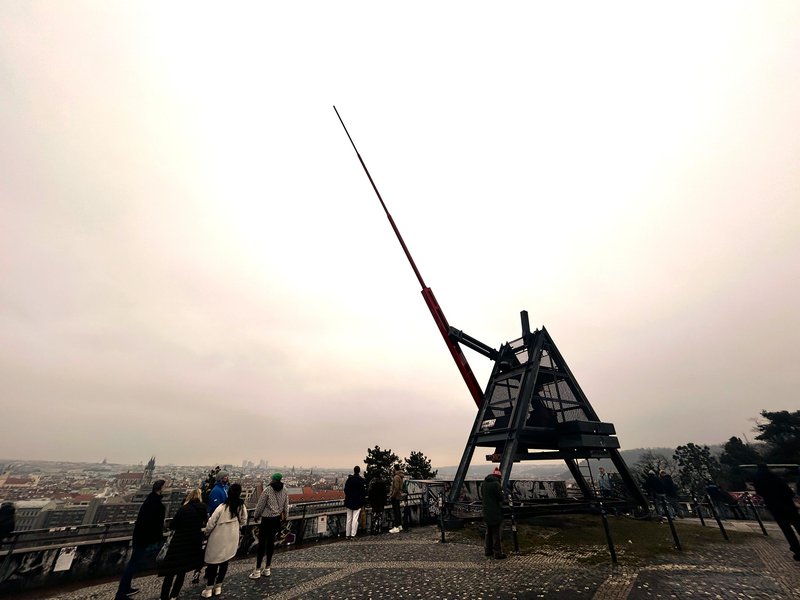
Why Is the Metronome Here? A Short but Necessary Historical Context
At first glance, the metronome in Letná Park may look like a striking but abstract structure. Its presence here, however, is not decorative. It marks a deliberate and meaningful absence.
This location once held a massive Stalin monument — at the time, one of the largest Stalin statues in the world. It was not only an ideological symbol but also a physical weight imposed on the city’s skyline. When it was demolished, what remained was not just an empty space, but a historical void. The metronome was placed here not to replace the monument, but to acknowledge that void.
Its movement represents time itself — in contrast to the rigidity of the past. It does not glorify power, nor does it erase memory. Instead, it keeps the history visible without freezing the space in it. This approach reflects Prague’s broader relationship with its past: the city does not hide it, but it also refuses to be defined by it.
For this reason, the metronome area is more than a photo stop. Standing here and looking out over the city offers a quiet but clear insight into how Prague processes its historical layers.
Walking Logic in Letná Park: Why This Park Is Meant to Be Read from Above
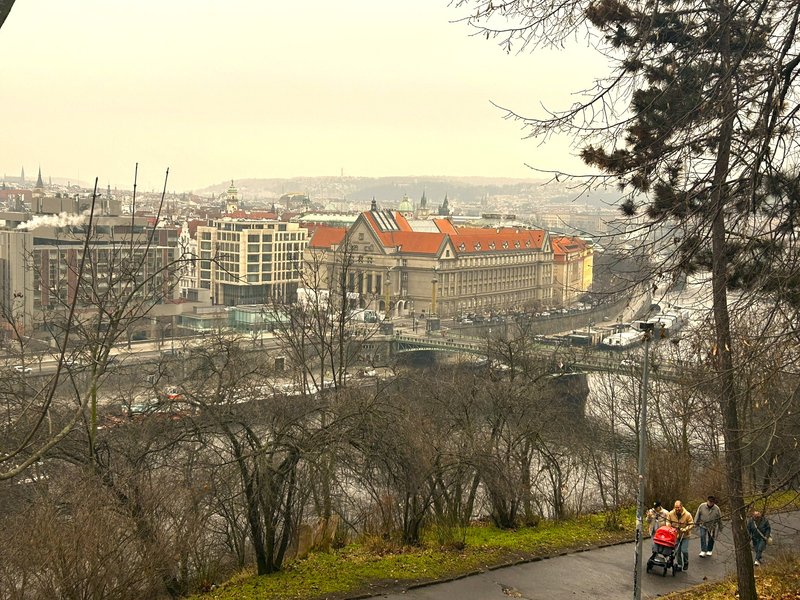
Walking through Letná Park follows a different logic than most urban parks. The goal here is not to move from point A to point B efficiently, but to gradually widen your perspective. Below, Prague feels dense, lively, and often crowded. From Letná, the city appears calmer, more structured, and easier to interpret.
This is not a park you simply “look at”; it is a park you read. Where you stop, how long you stay, and which direction you face matter more than covering distance. Letná does not reward fast walking. It naturally slows you down.
From street level, Prague feels romantic and busy. From above, it becomes layered and legible. Letná Park allows you to shift between these two experiences. Before following any specific route here, it helps to understand why this park is designed to be experienced from a higher viewpoint.
In the next section, we’ll move from this logic into a clear, short walking route — followed by an extended option for those who want to spend more time without leaving the rhythm of the park.

Short Walking Route: A Clear First Walk Through Letná Park
For a first-time walk through Letná Park, the key is not trying to “cover” the entire park. Letná works best when approached as a controlled, linear experience rather than a checklist.
One of the most practical access points is from the Old Town side, using the stairs that lead up toward the park. As you climb, the city noise fades quickly. By the time you reach the park level, the atmosphere has already shifted — more open, quieter, and less compressed.
Once inside, staying on the main path that runs parallel to the river is enough. The view does not open all at once. First, you catch fragments of bridges. Then sections of the Old Town skyline. Only later does Prague Castle fully enter the frame. This gradual reveal defines the rhythm of the walk and encourages you to slow down.
As you approach the metronome, the park feels more exposed. This is one of the windiest and most open points in Letná, and people tend to linger here without rushing. It is an ideal stopping point for the short route. The movement slows naturally, and for many visitors, this is where the walk pauses rather than ends.
For travelers with limited time, this short route captures the essential logic of Letná Park. You experience the perspective, understand the spatial distance from the city center, and leave with a clearer mental map of Prague.
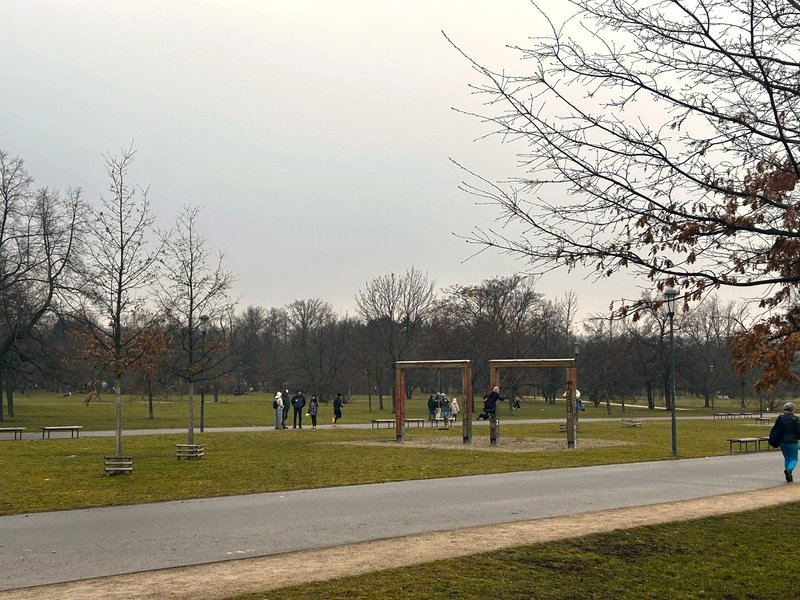
Extended Option: Staying in the Park While Letting the City Expand
If you have more time, Letná offers a natural way to extend your walk without breaking its internal rhythm. Instead of exiting the park immediately after the metronome, continuing along the inner paths reveals a different side of the space.
This section feels noticeably more local. You start seeing people using the park as part of their daily routine — walking dogs, taking short breaks, or simply passing through. The touristic density drops, and the park shifts from a viewpoint to a lived environment.
As the walk continues, the edges of the park soften. You don’t suddenly step into narrow streets; instead, the transition from park to city happens gradually. This gentle boundary is one of Letná’s defining characteristics. It allows you to stay oriented without feeling abruptly disconnected from the green space.
This extended route works especially well for travelers who have already spent a few days in Prague and want to experience the city beyond its headline landmarks. The walk becomes longer, but not heavier. The pace remains consistent with Letná’s quiet tempo.
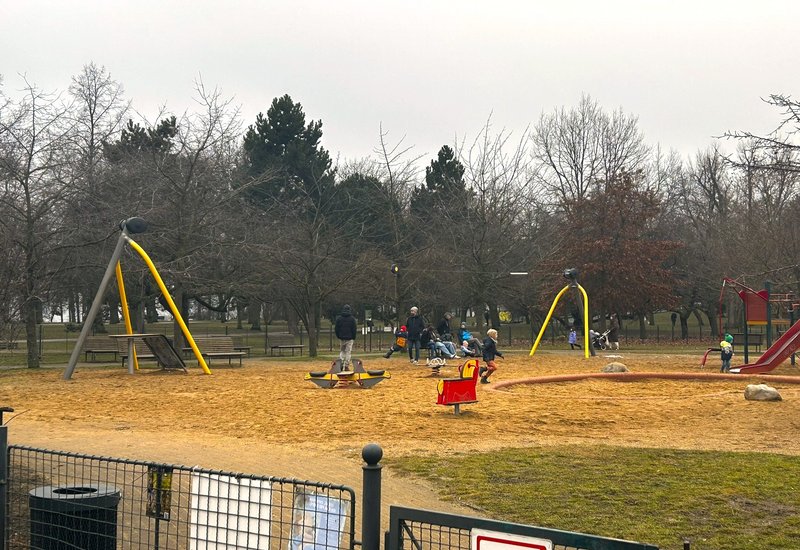
Where to Stop — and Where to Keep Moving
Not every spot in Letná Park is meant for stopping, and that is part of its strength. Some areas function best as passages rather than destinations. Others slow you down without asking.
The open viewpoints facing the river invite longer pauses. Deeper inside the park, movement feels more natural than standing still. Letná does not encourage constant photography. In many moments, putting the camera away makes more sense than framing the view.
Rather than following a fixed set of stops, the park rewards attention. You stop where the space feels open, and you move on when it doesn’t. This flexible rhythm is what makes walking through Letná feel intuitive rather than planned.
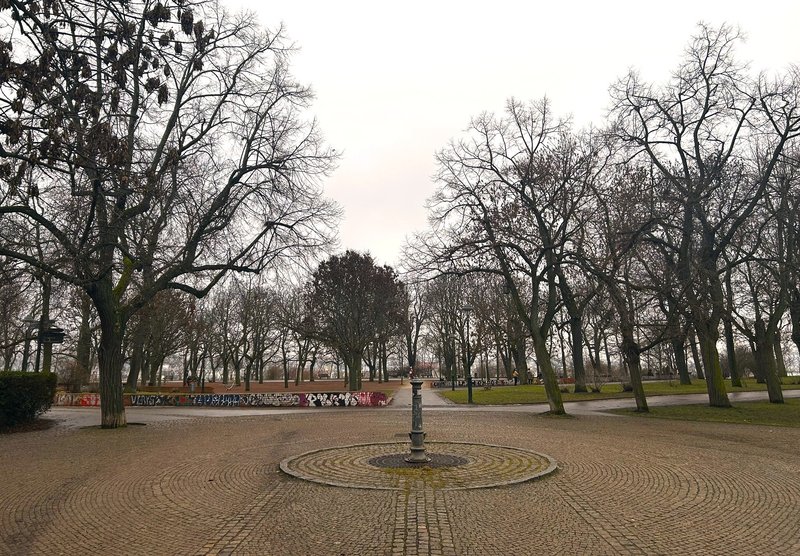
Looking at Prague from Letná: Distant from the Crowds, Still Connected
Time spent in Letná Park does not feel like time away from Prague. Instead, it creates a more deliberate relationship with the city. While the streets below remain busy, the city above becomes readable as a whole. That distance is what gives Letná its value.
One of Letná’s defining qualities is that it has never fully turned into a touristic space. Most people you encounter here are not visiting for the first time; they are using the park as part of daily life. Short breaks, routine walks, and quiet pauses shape the atmosphere. This everyday presence prevents Letná from becoming a spectacle.
Because of this, time in Letná cannot be measured by how much you “see.” You leave not with a checklist completed, but with a clearer sense of how Prague fits together. The park offers understanding rather than highlights.
Who This Walk Works For — and Who It Doesn’t
Letná Park is not designed for fast-paced itineraries or travelers trying to maximize the number of landmarks in a short time. If your priority is efficiency and density, this walk may feel slow.
However, for visitors who have already explored Prague’s core sights and are looking to change the rhythm of their trip, Letná becomes meaningful. It is less a stop between attractions and more a shift in perspective. After walking here, Prague feels less like a collection of postcard scenes and more like a city with structure and depth.

How Letná Changes the Way You Read Prague
A walk through Letná makes it clear that Prague cannot be understood from a single center. Some places look central on a map but feel peripheral in experience; others sit outside the visual core yet carry the city’s logic. Letná highlights this contrast.
Seeing Prague from above alters how you move through it afterward. You begin noticing how viewpoints, elevation, and distance shape the city’s rhythm. Letná becomes a reference point — not because it dominates the skyline, but because it reframes it.
If you want to explore Prague beyond its bridges and squares, Letná works best when paired with other walks that question traditional routes. You may find it helpful to continue with:
- Prague’s Misleading City Center: What First-Time Visitors Get Wrong – for understanding why Prague does not function around a single core
- Romantic but Non-Touristy Walking Routes in Prague – for quieter paths that still stay connected to the city
- Mala Strana Travel Guide: Streets, Churches & Walking Routes – to experience how the city feels when you move from elevated viewpoints back into narrow streets
Letná Park sits between these perspectives. It is not an endpoint, but a transition — a place that helps you move through Prague with more awareness and less urgency.


