

Things to Do in Prague in Winter (2026) | Calm Walks & Smart Routes
Is Prague worth visiting in winter? A realistic guide to calm walks, smart routes, and enjoying the city despite cold weather.
Things to Do in Prague in Winter | Calm Walks & Smart Routes
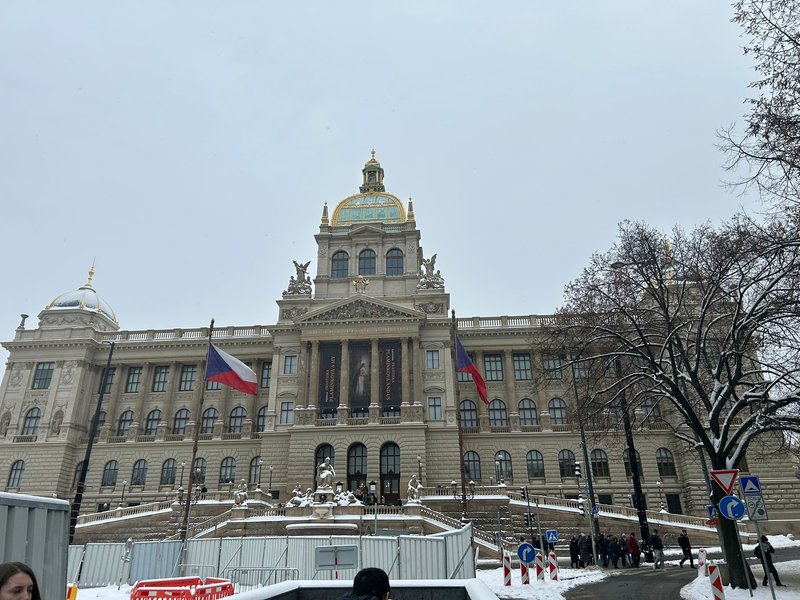
How Cold Is Prague in Winter, Really?
Prague is cold in winter. There’s no reason to soften that.
But it’s not the kind of cold that makes the city unwalkable. What matters more than temperature is preparation and expectations.
From December to February, daytime temperatures usually hover between 0–5°C. It does drop below freezing at times, but that doesn’t mean you’re freezing all day. Snow comes and goes; some winters barely see it. The bigger factor is wind, followed closely by short daylight hours.
By late afternoon — around 4:30 or 5:00 pm — it’s already dark. If you arrive expecting long sightseeing days, this can feel limiting. But winter in Prague isn’t about stretching the day. It’s about using time more deliberately.
The cold is real. What’s exaggerated is the idea that winter makes Prague unlivable.
The real problem is trying to explore it the same way you would in summer.
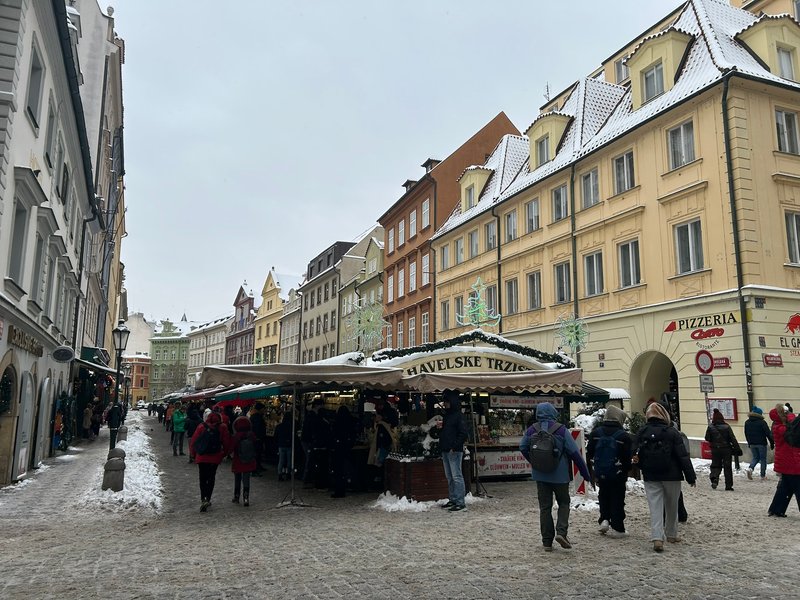
Why Prague Feels Calmer — and More Manageable — in Winter
Crowds are Prague’s biggest issue.
And winter solves a large part of that.
Bridges, courtyards, narrow streets — suddenly you’re not constantly stepping aside. You don’t wait for photos. You don’t feel rushed when you stop. For the first time, the city gives you space.
Winter in Prague isn’t about seeing more.
It’s about seeing with less noise.
This matters especially if you enjoy walking. Without the pressure to “fit everything in,” your pace naturally slows. And because you already know you can’t do it all, your planning becomes more realistic.
Winter removes the illusion of completeness — and that’s actually an advantage.
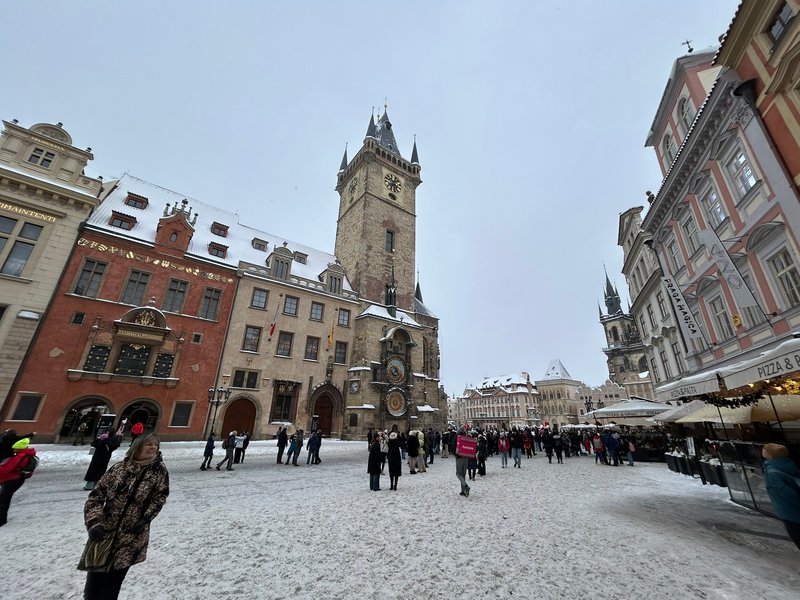
Why Exploring Prague in Winter Feels Different Than in Summer
In summer, Prague is outward-facing.
In winter, it turns inward.
That doesn’t mean it’s dull — just quieter. Streets are calmer, people walk faster, pauses are shorter. The rhythm changes.
In summer, you sit in a square for an hour.
In winter, you pass through it — and notice it more.
Details stand out: how courtyards are layered, how streets slope, how buildings relate to one another. Without crowds, the city starts speaking through its architecture instead of its atmosphere.
Winter Prague isn’t less romantic.
It’s simply less performative — and for many travelers, more honest.
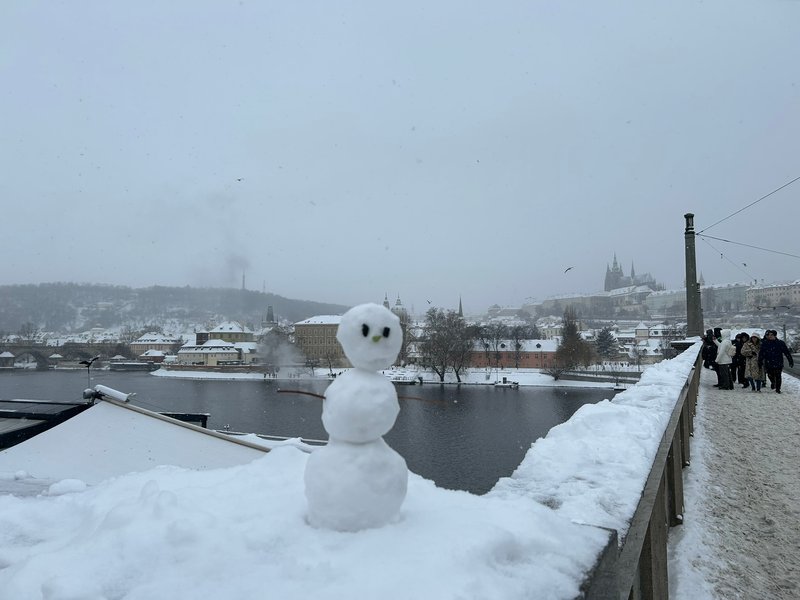
The Smart Way to Explore Prague in Cold Weather: Walk, Pause, Continue
Long, uninterrupted walks don’t work well in winter.
But that doesn’t mean you shouldn’t walk.
The key is rhythm:
walk → short stop → walk again
These stops don’t need to be cafés. A courtyard, a covered passage, a church interior, or a small enclosed space is enough.
The goal isn’t just to warm up — it’s to maintain momentum.
When done right, winter walking feels controlled rather than exhausting. Prague is particularly suited for this because:
- Distances are short
- Indoor and outdoor spaces are closely connected
- There’s rarely a long, empty stretch between points
With the right pacing, cold weather stops being the main factor.
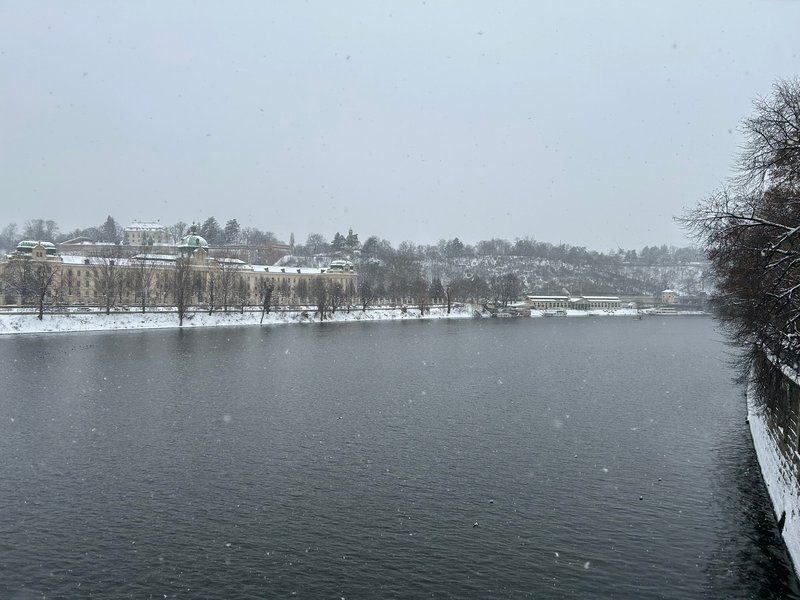
Areas of Prague That Work Better for Winter Walks
Not every part of Prague feels the same in winter.
And that matters more than most people expect.
Areas that work well in cold weather usually share a few traits:
- Buildings that block the wind
- Streets with manageable slopes
- Routes broken up by courtyards, passages, and small turns
Wide open squares and long exposed stretches look great in summer, but in winter they drain energy quickly. What works better are compact, layered neighborhoods where walking never feels endless.
The key isn’t popularity — it’s walkability under cold conditions.
Some districts naturally support this kind of movement, while others only shine when the weather is mild. Knowing the difference saves both time and patience.

Using Indoor Spaces Without Breaking Your Rhythm
One of the biggest mistakes in winter travel is treating indoor spaces as emergency shelters.
In Prague, indoor spaces are part of the flow.
Church interiors, courtyards, covered passages — they’re not interruptions, they’re connectors.
What matters is timing and duration.
Short, intentional stops work better than long breaks.
Think in cycles:
- 10–15 minutes indoors
- Back outside for another walk
- Then another brief pause
This keeps your body warm without slowing your day to a stop. More importantly, it preserves the mental rhythm of walking through the city instead of bouncing between extremes.
Winter travel works best when nothing feels final — just transitional.
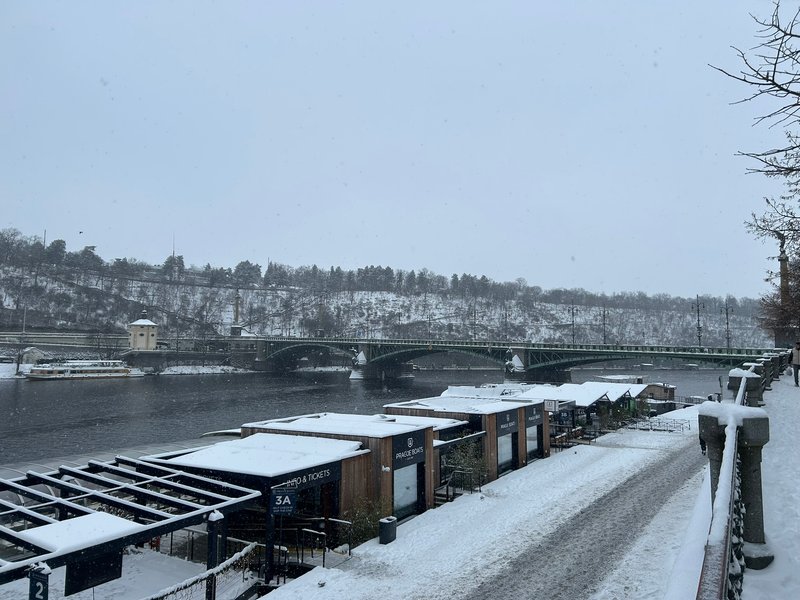
What Actually Feels Romantic in Prague During Winter (Without the Clichés)
Winter romance in Prague is often oversold.
The reality is quieter — and better.
There are no long café sessions outside. No lingering in open squares.
Instead, romance shows up in smaller, shared moments.
Slowing down on a bridge.
Standing silently in a courtyard.
Walking the same narrow street without rushing.
Winter strips away spectacle and leaves intimacy.
Not dramatic gestures — but shared direction.
When expectations stay realistic, these moments feel genuine rather than staged.
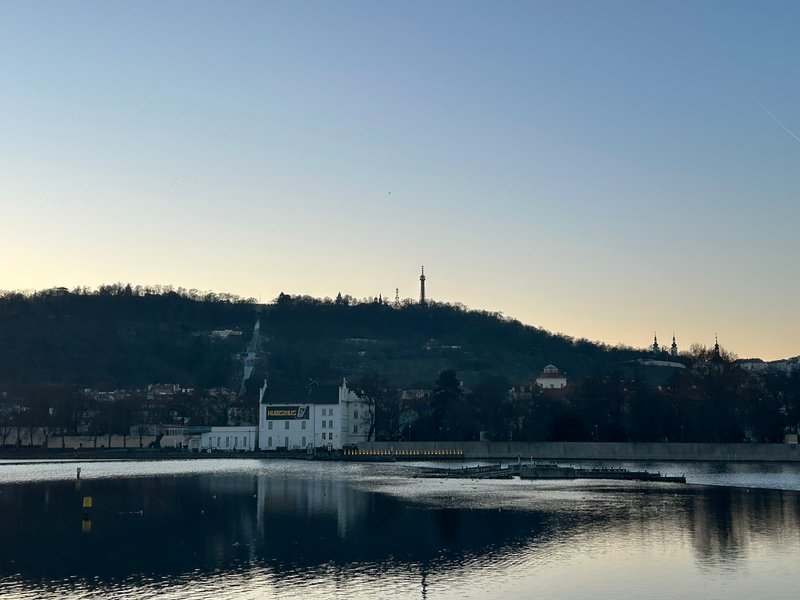
Things That Are Better Avoided in Prague During Winter
Most winter frustrations come from planning mistakes, not the weather itself.
Common pitfalls include:
- Overloading a single day with too many stops
- Spending too long in exposed areas just because they’re famous
- Following summer itineraries in winter conditions
- Assuming staying “in the center” automatically saves time
Winter forces selection.
Trying to do everything usually leads to fatigue instead of satisfaction.
The city rewards those who choose well, not those who choose more.
Who Winter in Prague Actually Works Best For
Winter in Prague isn’t for everyone.
And that’s worth saying clearly.
But for certain travelers, winter can be more rewarding than summer.
If you:
- Dislike crowds and constant movement
- Prefer walking over checklist sightseeing
- Enjoy cities when they feel quieter and more personal
- Value atmosphere over volume
winter Prague will likely suit you well.
On the other hand, if you:
- Want long days outdoors
- Rely on open-air cafés and terraces
- Feel frustrated when plans need adjusting
winter may feel restrictive.
This guide isn’t about convincing everyone to come in winter.
It’s about showing who winter actually works for — and how to approach it honestly.
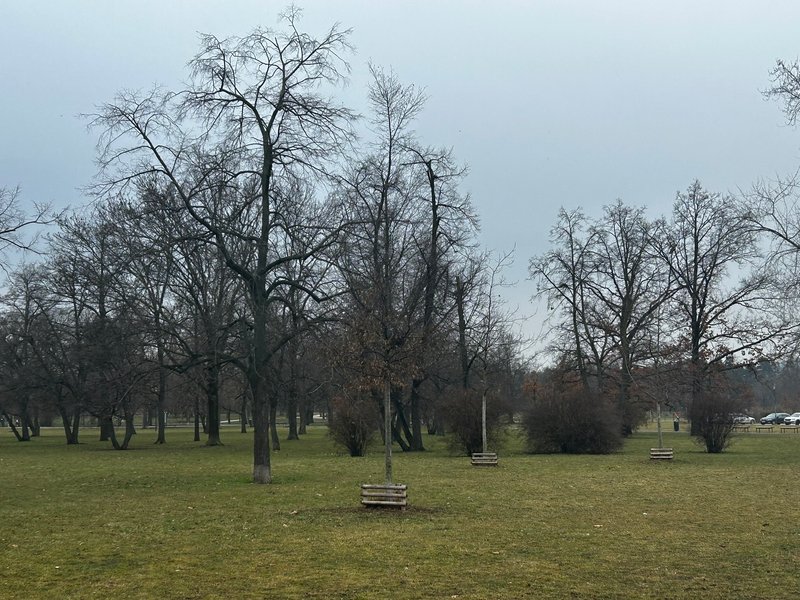
A Quick Decision Guide for First-Time Visitors
Is winter a risky time to visit Prague for the first time?
Not really — but it does require intention.
For first-time visitors, winter works best when:
- Daily routes are kept short
- You focus on one area at a time
- Walking is balanced with brief indoor pauses
- You question the idea of “the center”
In winter, the city won’t guide you.
You have to guide yourself.
When you do, even a first visit can feel focused and rewarding rather than rushed.
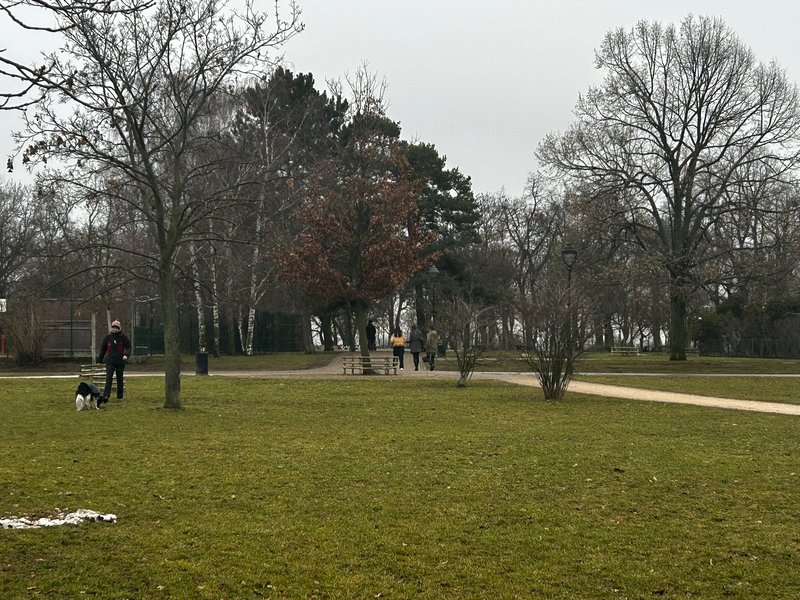
Prague in Winter: Less Polished, More Precise
Winter Prague is less postcard-ready.
But it’s more precise.
The city doesn’t perform.
It doesn’t try to impress.
It simply exists.
Crowds fade, movement slows, and what’s left is structure — streets, courtyards, proportions. Winter reveals whether you enjoy Prague for its image or for its substance.
If you like it in winter, you’ll love it in summer.
If not, you’ll know quickly — and that clarity has value.
Where to Go Next
If winter travel in Prague makes sense to you, these guides build naturally on that mindset:
- Prague’s Misleading City Center: What First-Time Visitors Get Wrong
→ Why staying central doesn’t always mean moving efficiently in winter - Mala Strana Travel Guide: Streets, Churches & Walking Routes
→ One of the most balanced districts for winter walks - Charles Bridge Guide: Morning or Evening?
→ How timing changes completely in winter conditions
Each of these looks at Prague through the same lens:
not how much you can see, but how the city works when you’re inside it.


