Charles Bridge Guide: Morning or Evening? | Prague
Is Charles Bridge better in the morning or evening? A realistic guide covering crowds, seasons, photography, and how to fit it into your Prague walk.
Charles Bridge Guide: Morning or Evening?
When Is Charles Bridge Actually Worth Visiting?
“Is Charles Bridge better in the morning or in the evening?”
It’s one of the most common questions asked by first-time visitors to Prague. But it’s also the wrong question.
The real issue isn’t the clock — it’s expectation.
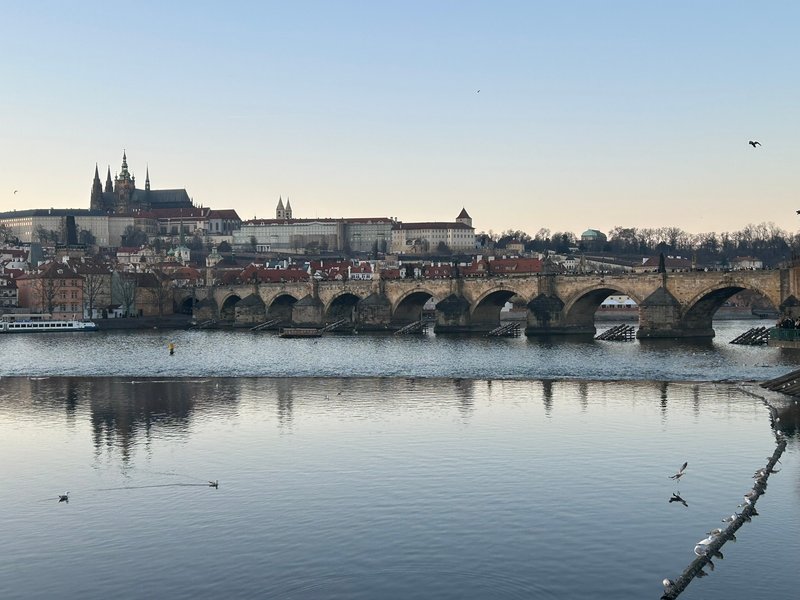
Charles Bridge is probably the most photographed place in the city. And at the same time, one of the most poorly timed visits people make. Because the bridge doesn’t behave like a single place throughout the day. It changes character. Morning and evening feel like two different cities sharing the same stones.
This guide isn’t about deciding whether the bridge is “beautiful.”
It’s about something more useful:
- When does it make sense?
- For whom does it actually work?
- What kind of experience are you looking for?
Charles Bridge in the Morning: Quiet, Cold, and Unfiltered Prague
If you step onto Charles Bridge early in the morning, the first thing you notice is the quiet. Not a cinematic, romantic silence — but the kind that feels practical. The city simply hasn’t started yet.
In winter, especially around February, this quiet becomes sharper:
- The air is cold and direct
- Wind moves freely across the bridge
- Light is flat, often grey, rarely dramatic
But that’s exactly why morning works for certain travelers.
There’s space.
You can stop.
You can look closely.
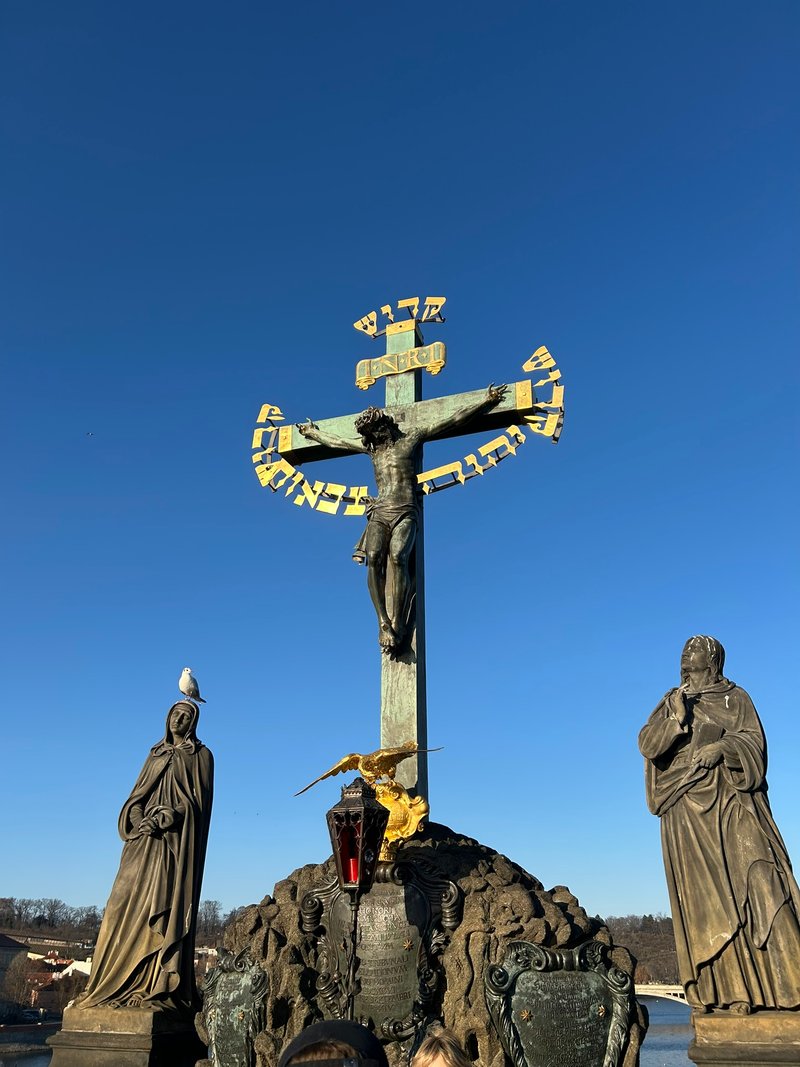
Statues become objects, not backdrops.
Crossing the bridge feels like being there, not passing through a crowd.
From a photography perspective, mornings are straightforward:
- The bridge isn’t packed
- You don’t wait for gaps between people
- The river looks calmer, less staged
That said, morning Charles Bridge isn’t for everyone.
If you’re expecting:
- warm atmosphere
- street music
- glowing city lights
the experience may feel too plain. Morning suits travelers who want Prague without decoration — stripped down and honest.
Charles Bridge, Depeche Mode, and the Aesthetics of Emptiness
Charles Bridge holds a strong place in popular culture, but not always in the way people expect. Beyond films and postcards, Prague has long attracted artists who weren’t interested in crowds or spectacle, but in mood.
One of the most referenced examples is Depeche Mode.
Enjoy the Silence era imagery is closely associated with Prague — not as a tourist stage, but as a visual environment. During that period, the band used the city for photo sessions and visual material, often early in the day, away from crowds. The goal wasn’t to capture landmarks, but to use Prague’s emptiness, distance, and restraint.
This matters for understanding Charles Bridge.
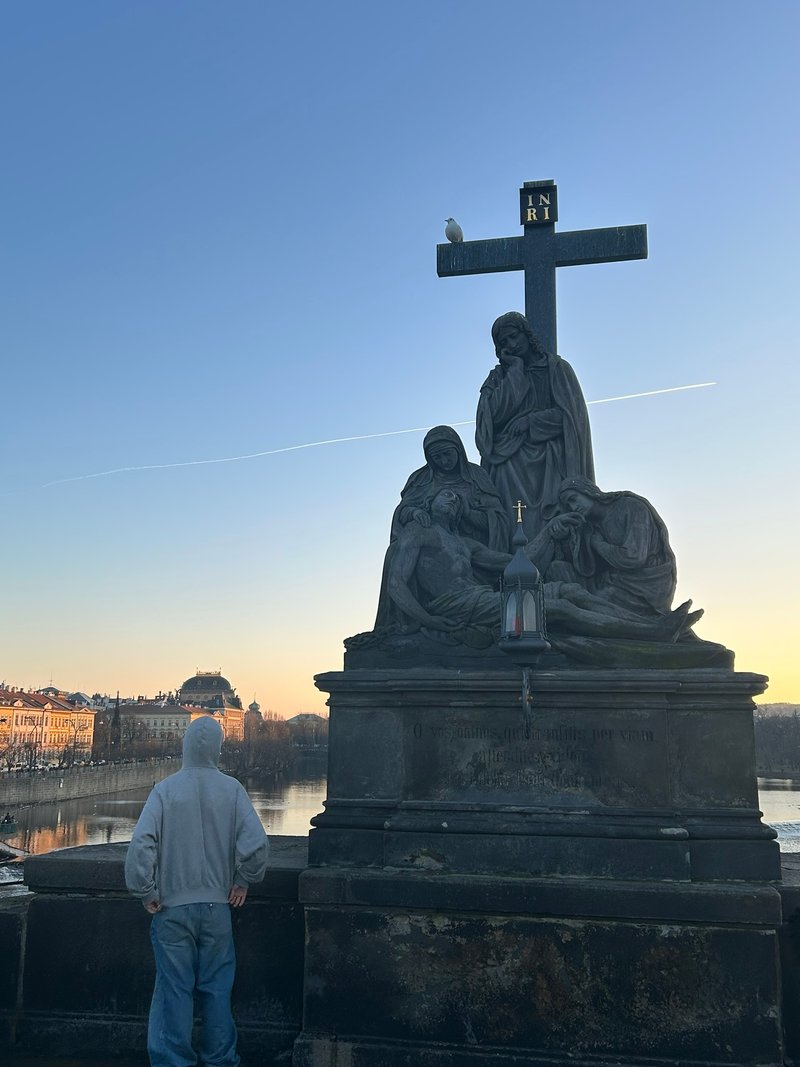
In popular imagination, the bridge is sold as romantic and atmospheric. In reality, that atmosphere only exists when space is allowed to exist. Early hours remove noise, reduce movement, and let the structure speak on its own terms.
Depeche Mode’s Prague wasn’t about “silence” as absence of sound — it was about removing excess. Charles Bridge in the morning works the same way. It’s not quiet because nothing is happening. It’s quiet because nothing is competing for attention.
That’s why timing matters.
Silence on Charles Bridge isn’t given — it’s chosen.
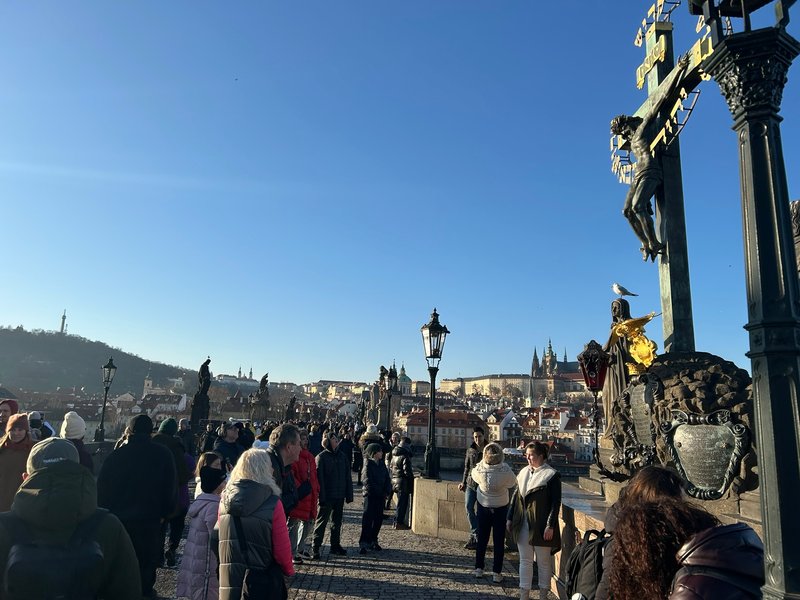
How the Season Changes the Charles Bridge Experience
Timing isn’t just about hours — season plays an equally important role in how Charles Bridge feels. The same walk can feel calm, rushed, or overwhelming depending on the month you’re there.
Winter (January–February):
This is when the bridge is most honest.
- Mornings are clearly superior
- Crowds are thinner
- Cold weather keeps people moving
There’s no soft lighting, no romantic filter. What you get instead is structure: stone, statues, river, space. Winter mornings turn the bridge into a place to observe, not consume.
Evenings in winter can be tricky. Once the sun sets, cold and crowd density combine into a short patience window. Most people cross quickly rather than linger.
Spring (March–May):
The most balanced season.
Morning still works well, but early evenings become tolerable. If you want flexibility without too much compromise, spring is the safest choice.
Summer (June–August):
The bridge changes function. It stops being an experience and becomes a corridor.
Crowds are constant, and the difference between morning and evening is less about atmosphere and more about survival. Early morning is the only realistic option if you want space.
Autumn (September–October):
Light softens, movement slows. The bridge becomes readable again. It’s one of the best seasons for those who want photographs without extreme crowd pressure.
If you’re visiting Prague in February, the takeaway is simple:
Morning isn’t just better — it’s necessary.

Photographing Charles Bridge: Timing Matters More Than Technique
Charles Bridge is often approached the wrong way by photographers. Most people focus on shooting on the bridge. In reality, the strongest images are often taken away from it.
Morning photography:
- Best time to shoot on the bridge itself
- Space allows clean compositions
- Statues and textures stand out
The downside? Light is flat. You gain clarity, not drama.
Evening photography:
- Better for distant shots
- City lights add depth
- Reflections become more visible
Trying to take photos on the bridge in the evening usually leads to frustration. Movement is constant, and stopping feels intrusive.
A practical rule helps here:
If you want to show the bridge, step away from it.
If you want to feel the bridge, go early.
Evening on Charles Bridge: Atmosphere Without Control
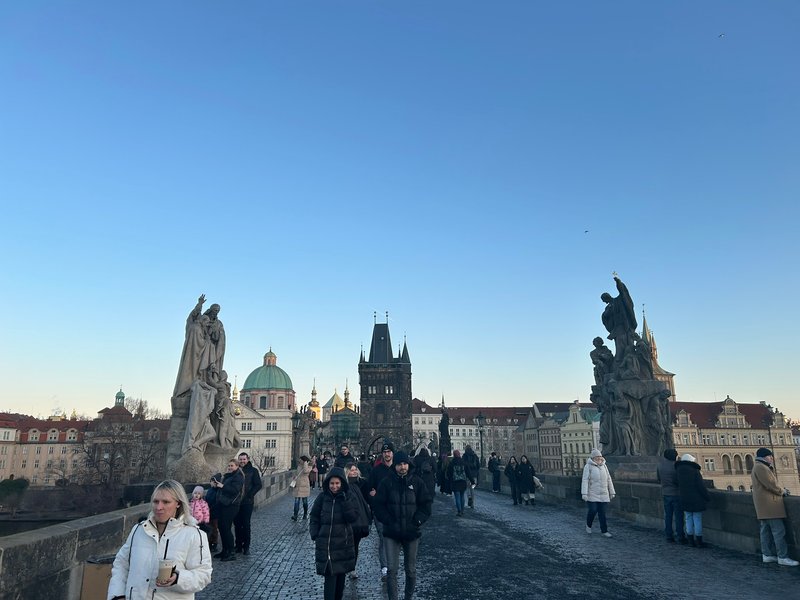
Evenings are what most people imagine when they think of Charles Bridge — lights, musicians, silhouettes. And yes, the atmosphere exists. But it comes with trade-offs.
In the evening:
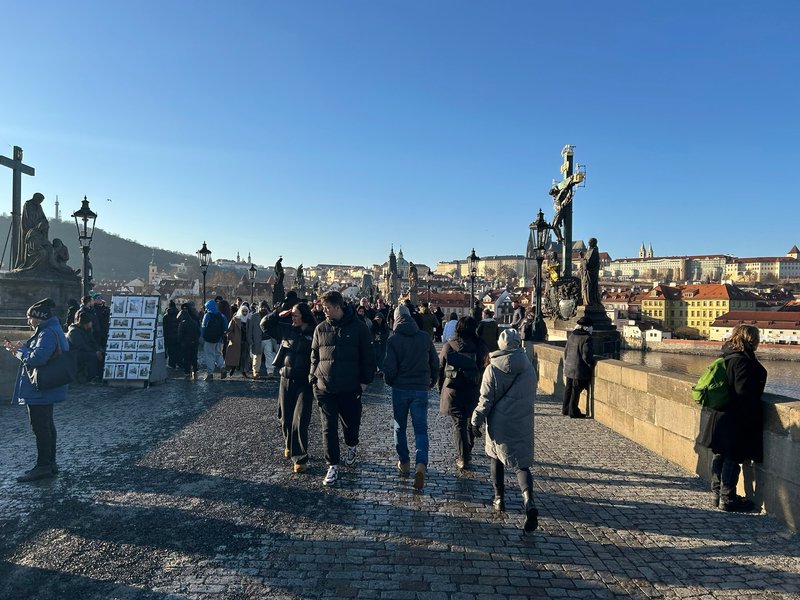
- Movement is dense
- Stopping is difficult
- The bridge dictates your pace
This doesn’t make the experience bad — just limited. For first-time visitors, it can feel impressive. For those who value control and observation, it often feels rushed.
The key mistake is expecting the bridge to slow down at night. It doesn’t. It accelerates.
Understanding this makes the decision easier:
Evenings are for passing through.
Mornings are for paying attention.
Where Charles Bridge Fits in a Walking Route
The most common mistake with Charles Bridge is treating it as the destination of a walk. In reality, the bridge works best as a transition point, not a place to settle.
Once you accept this, planning becomes easier.
A simple rule applies:
- Cross the bridge with intention
- Don’t try to build your walk around it
In the morning, Charles Bridge works well as a starting threshold — you cross while the city is still quiet, then move on before the rhythm accelerates. In the evening, it’s better approached as a brief encounter: you pass through, observe, and step away.
When people try to center their walk on the bridge itself, the experience often feels crowded and rushed. When the bridge is treated as a connector, the city opens up.
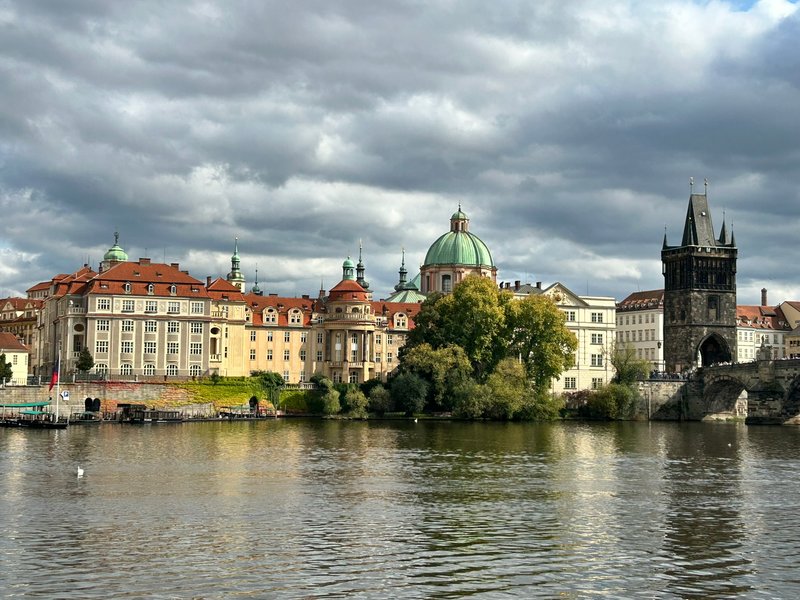
What to Do After Charles Bridge
What comes after the bridge shapes how you remember it.
If you move straight into other busy areas, the crossing feels like effort. If you deliberately choose calmer streets or a change in pace, the bridge becomes a meaningful transition rather than an obstacle.
This is where many first-time visitors misunderstand Prague. They assume that because Charles Bridge is iconic, everything around it should be equally intense. In practice, the opposite creates balance.
The bridge is movement.
What follows should be stillness.
If this approach appeals to you, these related walks may help you place Charles Bridge more intelligently within your time in Prague:
- Romantic but Non-Touristy Walking Routes in Prague
For routes where intimacy comes from quiet streets, not famous landmarks. - Prague’s Misleading City Center: What First-Time Visitors Get Wrong
A look at why Charles Bridge feels central — and why it actually isn’t. - Letná Park & Metronome Walking Route | Scenic Walks in Prague
For stepping away from the bridge and seeing the city from above, rather than within it.
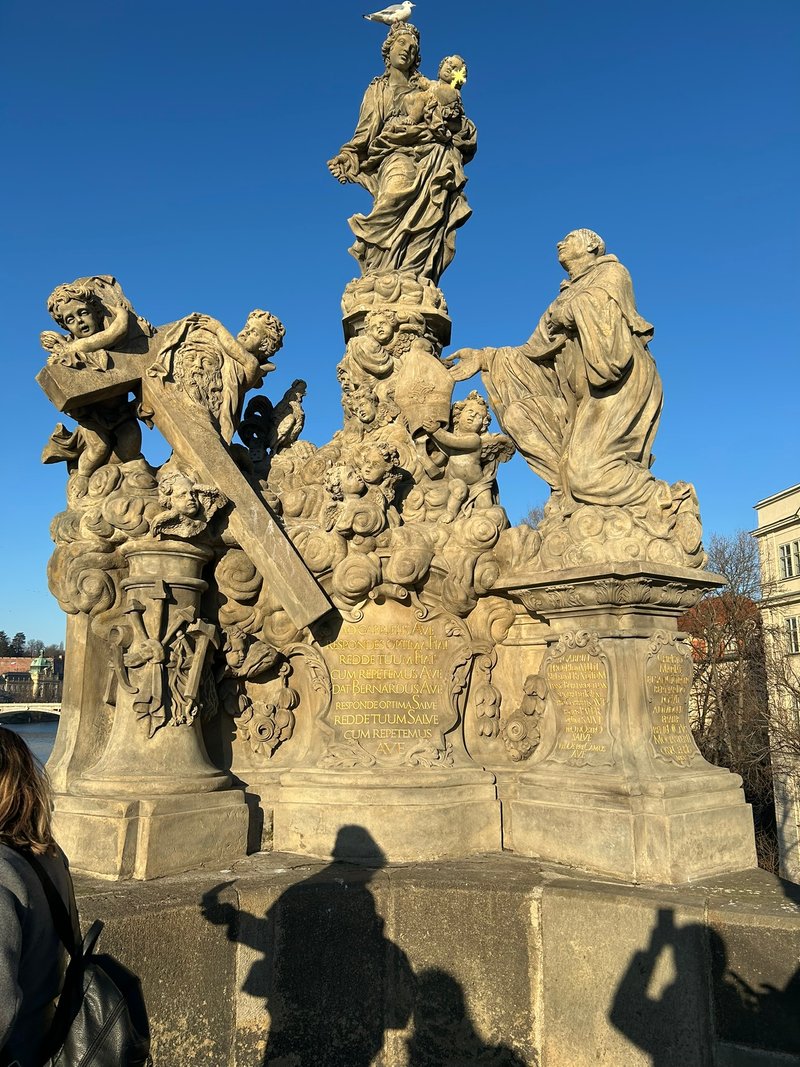
Is Charles Bridge Actually Worth It?
The better question isn’t whether Charles Bridge is worth visiting.
It’s whether you’re asking it to do the right job.
Charles Bridge doesn’t offer the same reward at all times of day. It responds to timing, not attention.
- Morning gives clarity.
- Evening gives atmosphere, but limits control.
- Romance appears only when expectations are realistic.
Once you stop treating the bridge as a destination and start using it as a passage, it becomes easier to appreciate — and easier to leave behind.
And sometimes, the smartest way to experience Prague’s most famous place is not to stay — but to cross it, understand it, and keep walking.